A complete step-by-step guide to importing from China to Canada in 2026 — covering supplier sourcing, shipping, customs clearance, and duties for Canadian businesses.
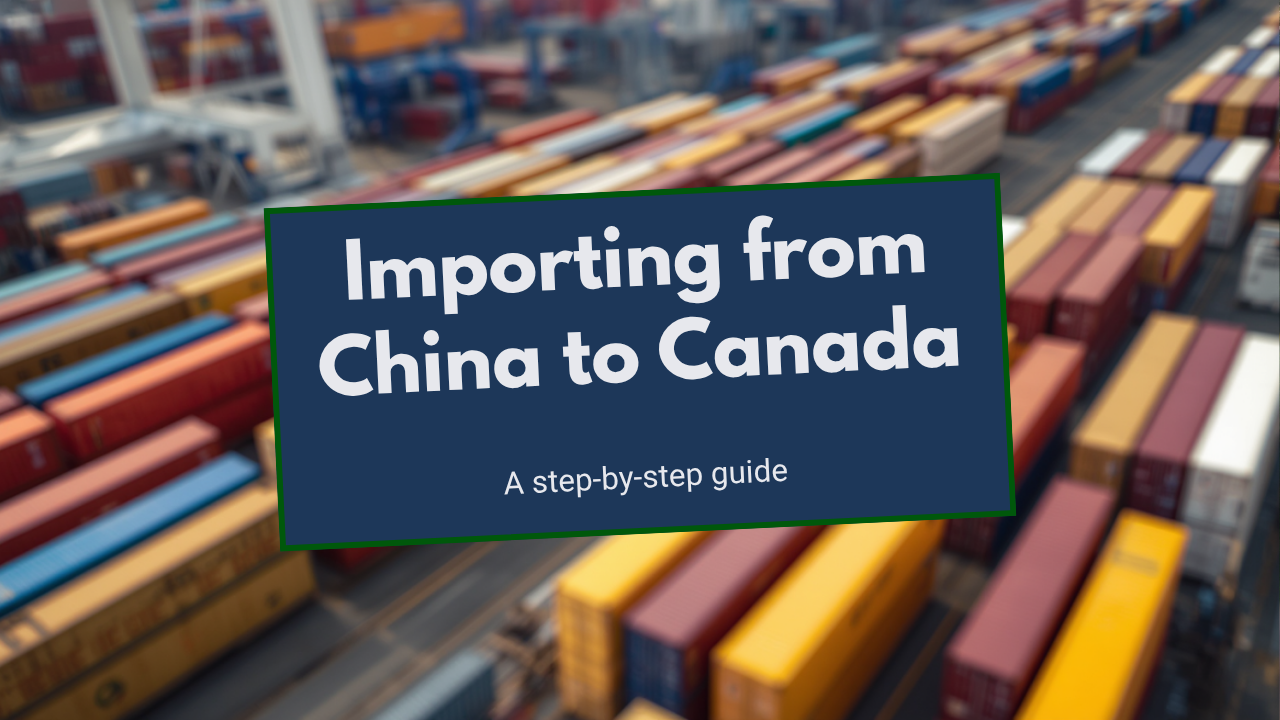
If you're a Canadian business owner wondering how to import from China to Canada, you're not alone. China is Canada's second-largest trading partner, and tens of thousands of Canadian businesses source products from Chinese factories every year — from small e-commerce operators to mid-sized brands and large retail chains.
This guide walks you through the entire import process step by step: finding the right supplier, placing your first order, shipping your goods, clearing Canadian customs, and paying the right duties. By the end, you'll have a clear picture of what importing from China actually involves — and where the real risks and opportunities lie.
The short answer is cost and variety. China has the world's most developed manufacturing ecosystem — covering electronics, apparel, furniture, industrial equipment, packaging, consumer goods, and almost every product category imaginable. For Canadian businesses, the combination of competitive factory pricing, wide supplier selection, and established export infrastructure makes China a natural sourcing destination.
The typical cost savings on manufactured goods — compared to domestic production or sourcing from higher-cost countries — often range from 30% to 70% depending on the product. Even after factoring in duties, freight, and the cost of your time, the economics typically favour China for most manufactured goods categories.
That said, importing from China comes with real complexity. Done well, it builds a profitable, scalable supply chain. Done poorly, it results in delayed shipments, quality problems, customs holds, and cash tied up in goods that don't meet your specifications.
Before you search for a single supplier, you need to know exactly what you're buying. A vague product idea gets you vague quotes and unreliable quality. Suppliers need enough information to price accurately and manufacture consistently.
Your product specification document should include dimensions, weight, and material requirements; any applicable Canadian safety certifications (CSA, UL, Health Canada, ISED for electronics); packaging requirements including bilingual labelling, bar codes, and retail-ready packaging; your target price (FOB China) and minimum order quantity (MOQ); and photos, reference samples, or technical drawings if available.
The more specific your brief, the more accurately a supplier can respond — and the more protection you have if the delivered goods don't match what was agreed.
There are several ways to find manufacturers and suppliers in China.
Alibaba.com: The world's largest B2B sourcing platform. It's a valid starting point but requires careful vetting. Not every "manufacturer" on Alibaba is actually a factory — many are trading companies. Look for Gold Supplier status, Trade Assurance coverage, and verified factory audits. Read our guide on using Alibaba safely as a Canadian buyer.
Canton Fair: China's largest trade fair, held twice yearly in Guangzhou. Attending gives you direct access to manufacturers across hundreds of product categories and is one of the best ways to vet suppliers face-to-face.
Sourcing agents: A professional sourcing agent based in China or with on-the-ground China operations handles supplier identification, vetting, sampling, quality control, and logistics on your behalf. This is the fastest way to build a reliable supply chain, particularly if you don't have existing supplier relationships. Epic Sourcing Canada operates this model for Canadian businesses across a wide range of product categories.
Key vetting criteria include requesting a business licence, factory audit report, and references from existing clients. Ask for samples before committing to a production order. Verify that the factory has experience producing for the Canadian or North American market — this affects whether they understand bilingual labelling, local safety certifications, and retail packaging requirements.
Once you've shortlisted 3–5 suppliers, send a formal Request for Quotation (RFQ) with your full product specifications. Ask each supplier to quote on an FOB (Free on Board) basis — this means the price includes getting goods onto the vessel at the Chinese port, and you handle freight from there.
Key terms to negotiate include the price per unit at your target MOQ and how price changes at higher volumes; lead time from deposit payment to goods-ready-to-ship; payment terms (standard is 30% deposit, 70% before shipment — try to push for the balance due after inspection); sample cost and timeline; and whether packaging is included.
Do not accept the first price as final. There is almost always negotiation room, particularly if you're ordering a meaningful quantity or signalling that you're a repeat buyer. Our FOB shipping guide explains incoterms and what each one means for your costs and responsibilities.
Never skip samples. Even if you're working from a detailed spec document, the sample tells you what you're actually getting. Review the sample against your specifications and document any deviations before approving production.
Once you approve the sample, confirm the approval in writing and reference the specific sample version. This becomes part of your quality standard for the production run.
For larger orders, consider arranging a pre-shipment inspection through a third-party quality control firm. This involves inspecting a statistically valid sample of your production run at the factory before shipment — catching problems before they're on a ship halfway across the Pacific.
How you move goods from China to Canada depends on your order volume, urgency, and budget.
Sea freight (FCL or LCL): For large orders (typically over 3 CBM), sea freight is the most cost-effective option. A Full Container Load (FCL) gives you an entire 20ft or 40ft container. Less than Container Load (LCL) lets you share container space and pay proportionally. Transit time from major Chinese ports to Vancouver is approximately 14–20 days; to Halifax or Toronto via alternative routing is 20–28 days.
Air freight: Faster (5–10 days) but significantly more expensive per kg. Best for urgent small shipments, high-value low-weight goods, or time-sensitive product launches.
Incoterms matter: Understand whether your supplier is quoting FOB, EXW, or DDP. FOB is typically recommended for experienced importers as it gives you control over freight costs. DDP (Delivered Duty Paid) shifts more responsibility to the supplier but can reduce your cost visibility and control.
When your goods arrive at a Canadian port of entry, they need to be customs cleared before you can take possession of them.
Commercial invoice and packing list: Your supplier must provide these. The commercial invoice must accurately declare the value, quantity, and description of goods. Undervaluing goods to reduce duties is fraud — the CBSA has sophisticated detection methods, and penalties are severe.
Customs broker: For most commercial importers, hiring a licensed Canadian customs broker is highly recommended. They handle technical classification of your goods, calculate duties and taxes, and file the entry with the CBSA. Fees typically range from $75 to $200 per shipment.
CARM: The CBSA's CARM system has changed how commercial importers interact with the border agency. You need to be registered on the CARM portal, post financial security, and ensure your Business Number is set up correctly for import/export. Our CARM guide for importers has everything you need to get set up.
Duties and taxes: Most goods from China are subject to the Most-Favoured-Nation (MFN) tariff rate, which varies by HS code — ranging from 0% to 18% for most consumer goods. You also pay GST/HST at the applicable rate. Note that the 2026 Canada-China trade deal has reduced duty rates in several product categories — worth reviewing before your next order.
Once cleared, your freight forwarder or customs broker will arrange final delivery. When the goods arrive, do a physical count and condition check against the packing list. Document any damages or discrepancies immediately with photos — you'll need this for insurance claims or supplier disputes.
Choosing suppliers based on price alone. The cheapest quote often comes from the supplier least equipped to meet your specifications reliably. Vet factories properly before committing.
Skipping samples. It feels like it saves time and money. It almost always costs more in the long run.
Underestimating lead times. China-to-Canada sea freight is 8–14 weeks from deposit to delivery when you include production time. Plan your inventory accordingly.
Not accounting for all landed costs. Your cost per unit is not the FOB price. Add sea freight, insurance, customs duties, broker fees, GST, port handling, and inland trucking to get your true landed cost.
Ignoring Canadian compliance requirements. Bilingual labelling is mandatory for consumer products. Electronics need ISED certification. Products for children face CCPSA requirements. Know what applies to your product before it arrives at the border.
Do I need a business to import from China to Canada?
For commercial imports, yes. You need a Business Number (BN) with import/export authority from the CRA. Personal use imports have a duty-free threshold, but anything you're selling commercially requires proper import registration.
How much does it cost to import from China to Canada?
It depends on product category, order volume, shipping method, and your HS code. As a rough benchmark, budget 15–25% on top of your FOB price for freight, duties, taxes, and brokerage fees. Run a proper landed cost calculation before committing to any order.
How long does shipping take from China to Canada?
Sea freight: 14–25 days port to port. Add production lead time (typically 30–60 days from deposit) and customs clearance. Total timeline from order placement to goods in your warehouse is usually 8–14 weeks for a new product order.
Do I need a customs broker?
You're legally permitted to self-clear your own goods in Canada, but for most businesses, using a licensed customs broker is faster, more accurate, and reduces compliance risk. The fee is small relative to the value of getting classification right.
What Canadian certifications do I need for products imported from China?
It depends on the product. Electronics need ISED approval. Products for children need CCPSA compliance. Food and health products need Health Canada approval. Electrical appliances need CSA or cETL certification. Speak to a compliance specialist for your specific category.
Importing from China to Canada successfully requires getting dozens of things right simultaneously — supplier vetting, quality control, accurate landed cost modelling, compliance documentation, and logistics management. It's a lot to manage alone, particularly if it's your first time.
At Epic Sourcing Canada, we handle the full sourcing process on behalf of Canadian businesses. Our team in Canada and China identifies qualified manufacturers, manages samples, coordinates quality inspections, arranges freight, and guides you through customs and compliance requirements — so you can focus on growing your business rather than managing the supply chain.
Whether you're placing your first import order or looking to build a more efficient, reliable supply chain, we'd love to help. Contact Epic Sourcing Canada today to discuss your product and get a clear picture of what importing from China actually costs and what it takes to do it right.