The complete guide to importing from China to Canada — CBSA duties, Incoterms, CARM setup, supplier vetting, quality inspection, and customs clearance explained.
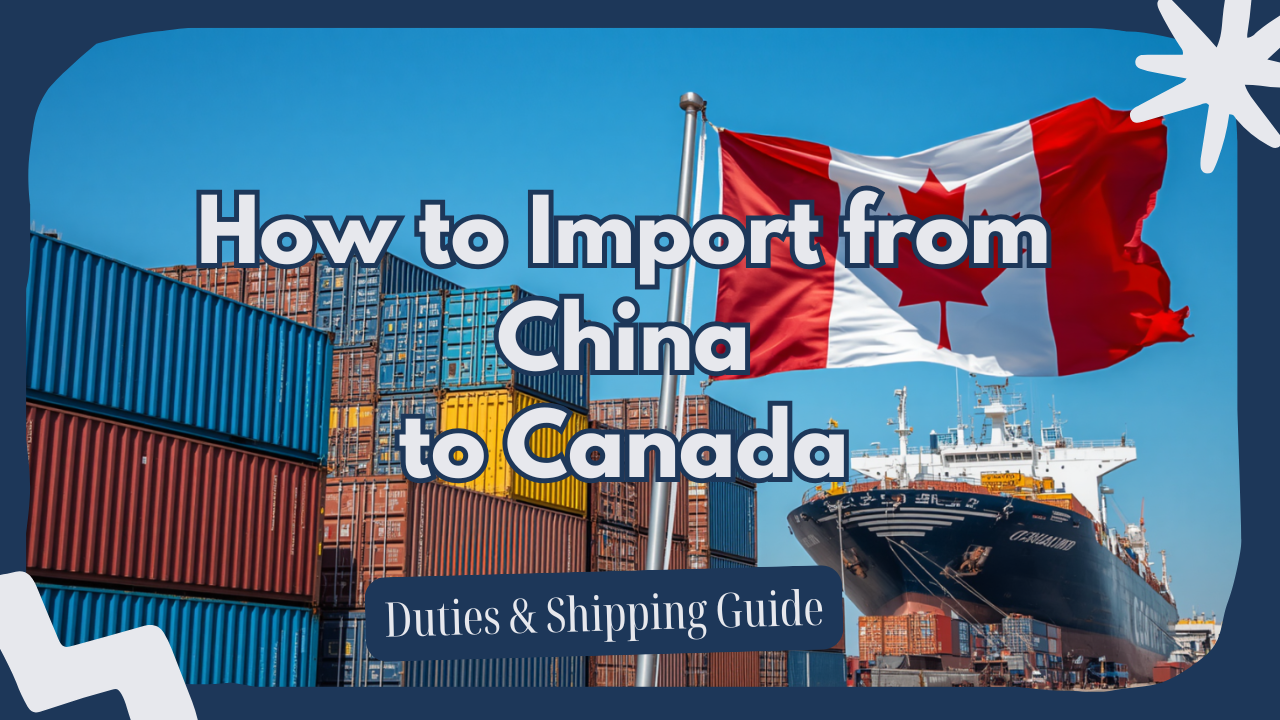
Importing from China to Canada is one of the most cost-effective supply chain strategies available to Canadian SMEs — but it's also one that trips up first-timers at almost every step. Between CBSA classifications, Canada-China duties, shipping terms, CARM registration, and supplier vetting, there's enough complexity to make most business owners stall before they even get started.
This guide walks you through the full process of importing from China to Canada in plain language — from picking a supplier to clearing customs at the Canadian border. Whether you're importing for the first time or trying to tighten up a process that's costing you more than it should, this is the complete picture.
Before you contact a single supplier, you need to know your product's Harmonized System (HS) tariff code. This six-to-ten digit number determines the duty rate CBSA will apply to your goods when they enter Canada.
You can search HS codes on the Canada Border Services Agency website or through the World Customs Organization database. The Canadian version (the Schedule of Customs Tariff) breaks codes down to 10 digits and specifies the applicable duty rate for goods originating from China.
This matters for two reasons: First, it tells you your landed cost before you commit to an order. Second, some products require import permits, certifications, or compliance filings that you'll need to arrange before your shipment arrives at the border. Discovering this after your container is on the water is expensive.
If you're uncertain about your HS code, a licensed Canadian customs broker can advise you — and this is money well spent before your first order.
Canada does not have a free trade agreement with China. This means most goods imported from China are subject to the Most Favoured Nation (MFN) duty rate, which varies by product. Common rates range from 0% (for many industrial inputs and electronics) to 18–20% for consumer goods and apparel.
On top of the duty, you'll pay GST (5%) on the duty-inclusive value of the goods. If you're a GST/HST registrant, this amount is typically recoverable as an input tax credit — so for most businesses, the net GST cost is zero. The duty itself is not recoverable.
Canada import duties from China have also been affected by ongoing trade tensions. In 2024 and 2025, Canada introduced significant surtaxes on specific product categories from China, including electric vehicles (100%), steel (25%), and aluminum. For most general merchandise, standard MFN rates still apply — but it's worth checking CBSA's current tariff schedule before you finalize your landed cost calculations.
The formula for landed cost is: FOB price + freight + insurance + CBSA duty + GST/HST + customs broker fee + any port/warehouse fees. Many first-time importers forget two or three of these line items and are surprised when their shipment costs 25% more than expected at clearance.
The Incoterm on your purchase order determines who pays for what and who bears risk at each stage of the shipment. For imports from China to Canada, the most common terms are:
FOB (Free on Board): The supplier delivers goods to the port of origin (e.g., Shanghai, Shenzhen, Ningbo). From that point, you pay freight, insurance, and all Canadian import costs. FOB is the standard term for most China-to-Canada shipments and gives you full control over the shipping arrangement.
EXW (Ex Works): You're responsible for everything from the factory gate. This is rarely practical for first-time importers — you'd need a freight forwarder to arrange inland China transport, port handling, export customs, ocean freight, and Canadian import. More control, more complexity.
CIF (Cost, Insurance, Freight): The supplier pays ocean freight and insurance to your destination port. Sounds convenient, but it means the supplier is choosing the freight forwarder, and the cost is typically marked up. Most experienced importers prefer FOB.
DDP (Delivered Duty Paid): The supplier handles everything including Canadian customs and duties. Sounds simple but is rarely available for full commercial shipments and can create serious issues if the supplier declares incorrect values to CBSA — you're still the importer of record and remain legally liable.
For most Canadian SMEs, FOB is the recommended starting point. You engage your own Canadian freight forwarder, control the shipping cost, and maintain full visibility over the shipment. Our FOB shipping guide for Canadian importers covers this in detail.
The CBSA Assessment and Revenue Management (CARM) system is now mandatory for all commercial importers in Canada. If you're importing commercially for the first time — or if you haven't already done this — you need a CARM account before your goods arrive at the Canadian border.
CARM is the portal through which commercial importers manage their import declarations, duty payments, and release of goods. Without a CARM account, your customs broker cannot process your release on your behalf under the new rules.
Setting up CARM requires a Business Number (BN) from the CRA, registration on the CARM Client Portal, and linking your customs broker to your account. Plan for at least 2–4 weeks of setup time if you're starting from scratch. Our CARM guide for Canadian importers walks through the setup process step by step.
The majority of Canadian importers start their supplier search on Alibaba.com. It's the world's largest B2B marketplace and has legitimate factory listings across virtually every product category. However, Alibaba also has trading companies, agents, and middlemen posing as factories — so vetting is essential.
When evaluating a potential supplier, look for:
Verified Supplier status on Alibaba: This means Alibaba has conducted an on-site inspection of the facility. It's not a compliance guarantee, but it confirms the business exists as listed.
Export experience to Canada or the US: Ask directly. Suppliers with North American export experience understand labelling requirements, safety standards, and documentation expectations. Suppliers who've never exported to Canada before often create customs clearance problems.
Compliance documentation: Request ISO 9001 certification, relevant product certifications (CSA, CE, RoHS as applicable), factory audit reports, and test reports from accredited labs. Legitimate manufacturers can provide these. If a supplier can't or won't, that's a red flag.
References from Canadian or US buyers: Ask for references. Good factories have them. Follow up on references — a quick email or LinkedIn message to another Canadian importer who's worked with that factory is worth more than any certificate.
If all of this feels overwhelming, a professional sourcing agent handles supplier identification, factory vetting, audit coordination, and initial negotiations on your behalf. This is often the most cost-effective path for first-time importers because errors at the supplier selection stage are expensive to correct later.
Never skip the sample stage. A signed purchase order for bulk production without approved samples is one of the most common and costly mistakes Canadian importers make. Even if a supplier's product photos look exactly right and their certifications check out, you need to physically inspect samples — ideally from the same production run as the bulk order, not a hand-built prototype.
What to check in samples: material quality, dimensions, fit, finish, and function. Bilingual English/French labelling requirements (mandatory for most consumer goods in Canada). Packaging integrity. Any Canadian compliance markings required. Electrical safety ratings if applicable.
If samples fail, address this before bulk production begins. The cost of a second sample run is trivial compared to the cost of receiving 1,000 non-compliant units.
Once you've approved samples and issued a purchase order, your job isn't done. Production quality drift is a real phenomenon in Chinese manufacturing — the factory may produce the first run well and cut corners on the second. Consistent quality requires clear, detailed tech packs or product specs attached to your purchase order as binding documents, in-process quality checks at key production milestones, and a pre-shipment inspection (PSI) when production is 80–100% complete.
A third-party inspection conducted by companies like SGS, Bureau Veritas, or QIMA costs around $200–$350 USD per man-day in China. This is the most important quality gate before goods leave China. If an inspection fails, you have leverage to demand a re-work or a price reduction before shipping. Once goods are loaded on a vessel, you've lost most of that leverage.
For shipments from China to Canada, you have two main freight options:
Ocean freight (LCL or FCL): Less-than-Container Load (LCL) is appropriate for smaller shipments (typically under 10–12 CBM). Full Container Load (FCL) — a 20-foot or 40-foot container — becomes cost-effective at larger volumes. Transit time from major Chinese ports (Shanghai, Shenzhen, Ningbo) to Vancouver, Prince Rupert, or Montreal is approximately 18–30 days.
Air freight: Significantly faster (5–10 days) but 4–6x the cost of ocean freight. Best suited for urgent replenishment of high-margin, low-weight products.
Your freight forwarder handles the shipping documentation (Bill of Lading, commercial invoice, packing list, Certificate of Origin if applicable) and coordinates with your Canadian customs broker for import clearance. Make sure your customs broker is connected to your CARM account before the shipment arrives.
When your shipment arrives at a Canadian port of entry, CBSA will review the import documentation and either release the shipment or select it for examination. Most routine commercial shipments are released quickly if documentation is accurate and complete.
Common reasons for CBSA delays or holds include: incorrect HS code, undervalued goods, missing import permits, non-compliant product labelling, or goods on restricted/prohibited lists. Your customs broker manages this process, but errors in your commercial invoice or packing list can cause expensive delays — so accuracy at the documentation stage is critical.
Once released, your freight forwarder arranges drayage to your warehouse or fulfillment centre, and you're in business.
Duties vary by product and HS tariff code. Canada doesn't have a free trade agreement with China, so MFN (Most Favoured Nation) rates apply — typically 0–20% depending on the product category. Some categories (EVs, steel, aluminum) have additional surtaxes. GST (5%) is also assessed on the duty-inclusive value but is recoverable for GST-registered businesses.
You're not legally required to use a customs broker, but almost all commercial importers do. A licensed customs broker classifies your goods, prepares the import declaration, and manages CBSA release. The cost is typically $100–$300 per shipment and is almost always worth it to avoid clearance errors.
CARM (CBSA Assessment and Revenue Management) is the mandatory portal for Canadian commercial importers. You must register before importing commercially. Your customs broker needs to be linked to your CARM account to clear your shipments. Set up your account well in advance of your first shipment.
Ocean freight from major Chinese ports to Vancouver or Prince Rupert takes approximately 18–25 days. To Montreal or Toronto via ocean, add 5–7 days for cross-Canada rail. Air freight takes 5–10 days. Factor in port processing and customs clearance time at both ends.
Alibaba is the standard starting point. Look for Verified Supplier status, check their export history, request compliance documentation, and order samples before committing to bulk. Alternatively, work with a professional sourcing agent who manages supplier identification, vetting, and negotiations on your behalf — this typically saves time and reduces risk significantly for first-time importers.
Importing from China to Canada is achievable for businesses of all sizes — but the difference between a smooth import and an expensive problem often comes down to having the right process in place from the start. At Epic Sourcing Canada, we work with Canadian SMEs to manage the full sourcing journey: factory identification, supplier vetting, sample management, quality inspection, shipping logistics, and ongoing account management.
Whether you're placing your first order or scaling an existing product line, we can help you source smarter, reduce risk, and land better-priced goods at your Canadian warehouse.
Talk to our team today — no commitment, just a clear picture of what's possible for your business.