Everything Canadian importers need to know about importing from China to Canada in 2026, from HS codes and CARM registration to shipping terms and customs clearance.
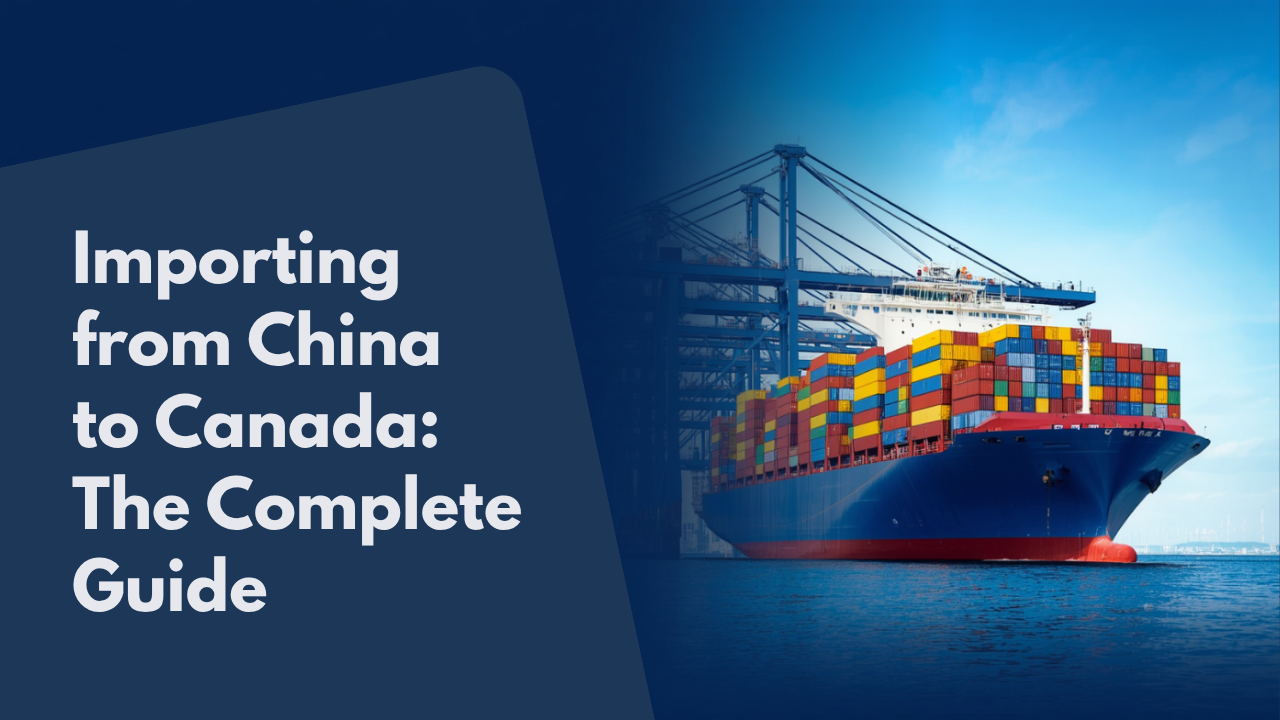
Every year, more Canadian small businesses skip the middleman and start importing from China to Canada directly — cutting out distributors, controlling their own margins, and getting products made to their own spec instead of settling for whatever's already on a Canadian wholesaler's shelf. It's a smart move, but it comes with a learning curve: customs classification, duty rates, CARM registration, freight decisions, and compliance requirements that don't show up until you're already mid-shipment.
This guide walks through the full process of importing from China to Canada in 2026, from your first order to the moment your goods clear customs and land in your warehouse — so you can go into it with a plan instead of finding out the hard way what CBSA expects.
Before you place an order, check whether your product category has any restrictions, required certifications, or prohibited status under Canadian law. Electronics, cosmetics, toys, and anything marketed to children all have specific compliance requirements — things like ISED certification for wireless devices, CSA or UL marks for electrical products, and bilingual (English/French) labeling for consumer packaged goods.
Skipping this step is one of the most expensive mistakes new importers make. A shipment that gets flagged for missing certification can be held at the border, returned to the exporter, or destroyed — and none of those outcomes are cheap. If you're working with a sourcing partner, this is exactly the kind of thing a good China sourcing agent should be flagging before production even starts, not after the container has shipped.
Every product entering Canada gets classified under a Harmonized System (HS) code, which determines the duty rate you'll pay. This isn't optional paperwork — getting the classification wrong can mean overpaying duties for years, or worse, getting hit with penalties for misclassification during an audit.
Your customs broker can help confirm the correct HS code, but it's worth doing your own research first so you're not relying entirely on someone else's interpretation. The CBSA's online tariff finder tool is a good starting point, and factoring duty costs into your unit economics before you commit to an order size will save you from unpleasant surprises later.
The CBSA Assessment and Revenue Management (CARM) system changed how duties and taxes are assessed and paid for Canadian importers. If you're importing commercially, you need a Business Number with an import/export program account, and you'll need to be set up in the CARM Client Portal to manage your import declarations and payments.
This isn't a step you want to be figuring out for the first time while a shipment is already en route. Get registered and understand your obligations under CARM before you place your first order — we cover this in more detail in our dedicated CARM guide for Canadian importers.
How you structure your shipping terms determines who's responsible for what — and where hidden costs tend to hide. The most common terms Canadian importers deal with are:
For most first-time and growing importers, FOB strikes the best balance of cost control and manageable complexity. For a deeper breakdown of when each term makes sense, see our full FOB vs. EXW guide.
Sea freight is dramatically cheaper per unit but slower — typically 25-40 days from major Chinese ports to Canadian ports, plus inland transit time. Air freight costs significantly more but can cut transit to under a week, which matters if you're managing tight inventory timelines or launching a product around a specific date.
Most Canadian SMEs default to sea freight for standard reorders and reserve air freight for urgent restocks, samples, or time-sensitive launches. Less-than-container-load (LCL) shipping is also worth understanding if your order volume doesn't justify a full container — you'll pay more per unit than FCL, but it's often still cheaper than air.
A licensed customs broker handles the actual clearance process on your behalf — filing your import declaration, calculating duties and taxes owed, and coordinating with CBSA. Most Canadian importers, even experienced ones, use a broker rather than self-clearing, simply because the paperwork and regulatory nuance isn't worth the risk of getting it wrong.
Your freight forwarder can often recommend a broker, or your sourcing agent may already have an established relationship with one who understands your product category.
None of the customs and duty planning matters if the product itself doesn't meet spec. A pre-shipment inspection — either done by your sourcing agent or a third-party QC service — catches defects, incorrect quantities, or packaging issues before the container leaves China, when it's still cheap and fast to fix.
Skipping this step to save a few hundred dollars is one of the most common regrets importers mention after receiving a shipment with problems that could have been caught at the factory.
The factory unit price is never the real cost of your product — it's just the starting point. True landed cost includes the unit price, freight (sea or air), insurance, duties, brokerage fees, and any inland trucking from the port to your warehouse. Miss any one of these and your margin calculations will be wrong before you've sold a single unit.
A simple way to build this out is to create a per-shipment cost sheet that adds every line item from factory invoice to warehouse delivery, then divides the total by units received to get a true per-unit landed cost. Compare that number against your target retail or wholesale price before you commit to a full production run, not after the container has already shipped. This is also where working with an experienced sourcing partner pays off — they've seen enough shipments to flag cost items first-time importers commonly forget, like demurrage fees for containers held too long at port, or currency exchange timing on deposits and balance payments.
Missing or incorrect documentation is one of the most common causes of customs delays. Before your shipment leaves China, confirm you have a commercial invoice with accurate product descriptions and values, a packing list, a bill of lading or air waybill, and any certificates of origin or compliance documentation your product category requires.
Small errors — a product description that's too vague, a mismatched value between invoice and packing list, or a missing certificate — can hold up an otherwise straightforward shipment at the border. Having your broker review documentation before the goods ship, rather than after they arrive in Canada, gives you time to fix problems while the shipment is still in transit instead of sitting in a bonded warehouse accumulating storage fees.
What is the average duty rate for goods imported from China to Canada?
It varies widely by HS code and product category — some goods are duty-free under Most Favoured Nation rates, while others carry rates of 5-20% or more. There's no single "average" rate; you need to confirm the specific classification for your product.
Do I need a business number to import from China to Canada?
Yes, for commercial importing you need a Business Number from the CRA with an import/export program account activated, plus CARM Client Portal registration.
How long does customs clearance take once goods arrive in Canada?
With complete, accurate documentation and a broker handling the process, clearance typically takes 1-3 business days, though this can extend if a shipment is flagged for inspection.
Can I import from China to Canada without a sourcing agent?
Yes, plenty of importers work directly with factories or through platforms like Alibaba. An agent becomes more valuable as order complexity, volume, or quality risk increases.
What happens if my shipment is missing required certification?
CBSA can hold the shipment, require it to be brought into compliance, or in some cases order it returned to the exporter or destroyed — all of which cost time and money, so it's worth confirming requirements before production starts.
Importing from China to Canada involves a lot of moving pieces — sourcing, quality control, shipping terms, customs, and compliance — and most of the expensive mistakes happen when one of those pieces gets overlooked. Epic Sourcing Canada manages the sourcing and quality side of the process so you can focus on your business instead of chasing down factory updates and customs paperwork.
If you're planning your next shipment or importing for the first time, reach out to our team and we'll help you map out the process from order to delivery.