A complete guide for Canadian businesses on importing solar panels and home energy products from China — covering duties, CSA certification, supplier vetting, and shipping logistics.
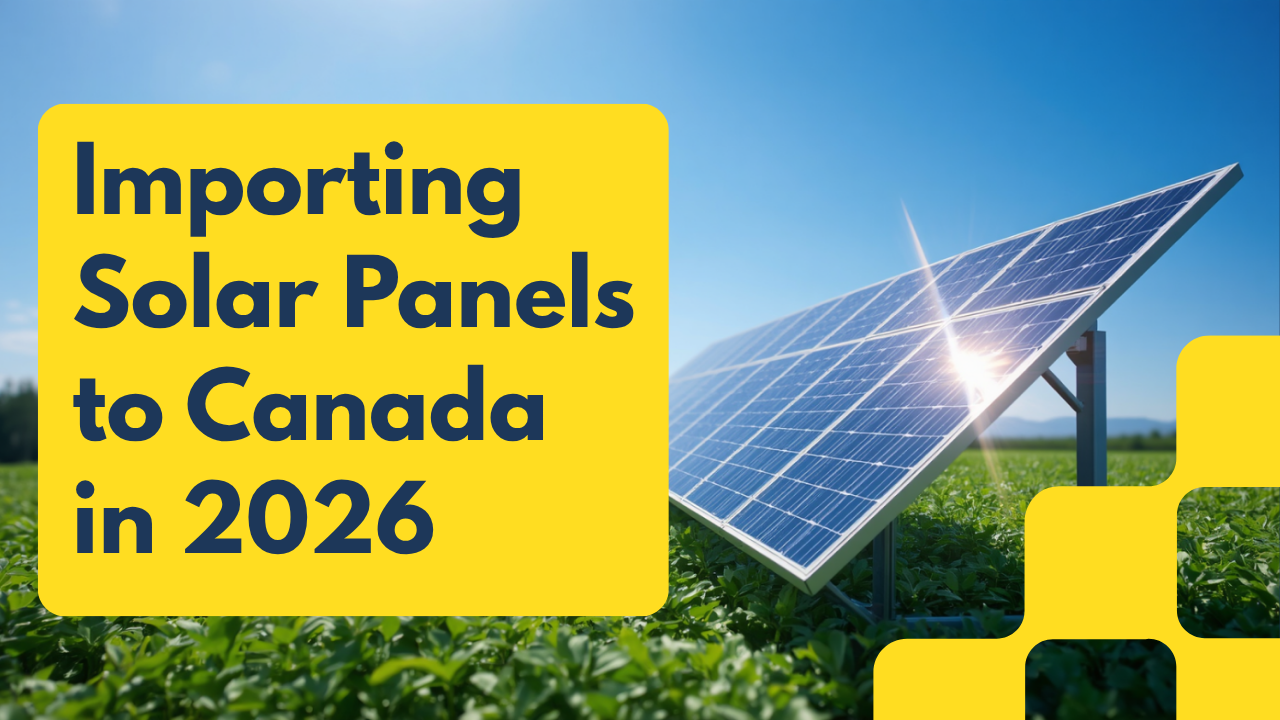
The market for solar panels in Canada is growing fast — and so is the opportunity for Canadian businesses to source these products directly from manufacturers in China. Whether you're a retailer stocking residential solar kits, a contractor supplying installations, or an entrepreneur building a private-label energy brand, understanding how to import solar panels to Canada is the difference between strong margins and a costly compliance mess.
This guide covers everything Canadian business owners need to know about importing solar panels and home energy products from China in 2026.
China produces more than 80% of the world's solar photovoltaic (PV) modules. From monocrystalline panels and inverters to LiFePO4 battery storage and portable power stations, the manufacturing depth and cost advantage of Chinese suppliers is unmatched. Provinces like Jiangsu, Zhejiang, and Guangdong are home to both the largest tier-1 manufacturers and thousands of smaller specialized factories.
A 400W monocrystalline panel that wholesales in Canada for CAD $200–$350 can be sourced directly from a Chinese factory for USD $65–$100 depending on quality tier and volume. Even after freight, duties, certification, and customs broker fees, Canadian importers can land product at 40–60% below local wholesale prices — creating real commercial opportunity.
The home energy product category is broad. For Canadian importers, it typically includes solar PV panels (monocrystalline, polycrystalline, bifacial), solar inverters and micro-inverters, solar charge controllers (MPPT and PWM), lithium iron phosphate (LiFePO4) battery storage systems, portable power stations and solar generators, EV charging equipment, smart home energy monitoring devices, and plug-in balcony solar kits. Each product has its own HS code, certification pathway, and duty rate — which is why treating "home energy products" as a single import category is a mistake. You need to classify each product line correctly before your first purchase order.
Canada's Most Favoured Nation (MFN) tariff rate for solar PV panels (HS code 8541.40) is currently 0% — so you won't pay import duty on the panels themselves. This is a meaningful advantage over the US market, where significant anti-dumping and countervailing duties apply to Chinese solar panels.
However, the total import cost is more than just the duty rate. Canadian importers also need to budget for GST/HST (5% GST applies at entry), ocean freight from Shenzhen or Shanghai to Vancouver (typically USD $1,200–$2,500 per 20' container), customs broker fees ($150–$400 per shipment), port and terminal handling fees, and third-party pre-shipment inspection (USD $300–$600, highly recommended).
For inverters, battery storage systems, and EV chargers, different HS codes apply — some with non-zero duty rates. Getting your HS code classification right from the start prevents reclassification penalties and delays at the CBSA border.
This is where most first-time importers of solar power Canada products run into problems. Any electrical product sold or installed in Canada must carry Canadian safety certification. Retailers won't stock uncertified product, provincial electrical inspectors will flag it, and CBSA can seize a shipment that doesn't meet Canadian standards.
For solar PV panels, UL 61730 or IEC 61730 certification is accepted in Canada — many tier-1 Chinese factories already hold these. Inverters must meet CSA C22.2 No. 107.1 or ULC equivalent and be rated for 240V/60Hz Canadian grid standards. Battery storage systems require UL 9540 for the energy storage system and UL 1973 for the battery pack; LiFePO4 chemistry is strongly preferred by Canadian fire marshals and insurers over NMC. EV charging equipment must meet CSA C22.2 No. 280.
When vetting factories, ask for certification documentation before you negotiate pricing. Verify all certificates directly through the certifying body's online registry — not just from a factory-provided PDF. Certificate fraud is a real issue in the Chinese solar supply chain.
Canada's Consumer Packaging and Labelling Act requires English and French on product packaging for retail sale. For solar panels and home energy products sold into the consumer market, bilingual labels are required. Most Chinese factories can accommodate bilingual labelling — specify this in your product specification sheet from the beginning of negotiations, not after samples are approved.
The quality gap between Chinese solar factory tiers is significant. A tier-1 panel may degrade at 0.3–0.5% per year; a tier-3 panel might fail within 3–5 years. For a product claiming a 25-year warranty, that difference matters enormously for your customers and your brand.
A practical vetting framework: verify certifications directly through UL, Bureau Veritas, or TÜV online portals (certificate numbers should be independently verifiable); request third-party test reports for PID resistance, UV degradation, and thermal cycling; assess production scale (a factory producing 500MW+ annually maintains quality systems that smaller producers often can't sustain); start with a pilot order smaller than your full commercial volume; and commission a pre-shipment inspection before panels leave China.
If you're new to buying from China, working with a sourcing agent based in China gives you someone on the ground who can attend factory audits, verify documentation, and manage quality control — particularly important for electrical products where failures create real liability.
Solar panels are fragile, heavy, and high-value. A standard 400W panel weighs 20–22kg, and a 40' container holds approximately 1,400–1,600 panels depending on pallet configuration. Ocean transit from Shenzhen or Shanghai to Vancouver takes 18–25 days. Marine cargo insurance must explicitly cover glass breakage — not all standard policies do. Most Canadian importers buy on FOB (Free On Board) terms; understanding your Incoterms obligations before signing a purchase order prevents costly disputes. For smaller orders, LCL (Less than Container Load) consolidation is available from most Chinese port cities at higher per-panel freight rates.
Once your shipment arrives at Vancouver or another Canadian port of entry, your customs broker files a B3 entry with CBSA. CBSA reviews the commercial invoice, packing list, bill of lading, and certification documentation, then assesses duties (0% for panels) and 5% GST. CBSA may select the shipment for examination — solar products are occasionally flagged for anti-dumping review even though Canada doesn't currently impose ADD on Chinese panels. Once cleared, your freight forwarder arranges final delivery.
Canada's CARM system has changed how importers interact with CBSA for commercial entries. If you're importing regularly, understanding CARM is worth your time — it affects bonding requirements and duty payment timelines.
Beyond commodity solar panels, here's where Canadian importers are finding margins: portable solar and power station bundles (strong demand in camping, RV, and remote cabin markets — high margin, ships in smaller quantities); plug-in balcony solar kits (emerging category in Canada following European demand — low regulatory barriers, accessible to renters and condo owners); LiFePO4 battery storage systems with proper Canadian certification (command premium pricing through electricians and solar installers); and commercial solar supply to installation contractors (larger volumes, stable recurring demand).
Canada's MFN tariff on solar PV panels (HS 8541.40) is 0%. You will pay 5% GST at the border plus freight, customs broker, and handling costs. Unlike the US, Canada does not currently impose anti-dumping duties on Chinese solar panels.
Electrical products sold in Canada must meet Canadian safety standards. UL 61730 and IEC 61730 certifications are accepted for solar panels. Many major Chinese manufacturers already hold these. Inverters, batteries, and EV chargers each have separate certification requirements.
Request the certificate number and verify it directly through the certifying body's online portal (UL, TÜV, Bureau Veritas). Don't rely solely on a PDF from the factory — certificate fraud exists in the Chinese solar supply chain.
Allow 20–45 days for production, 18–25 days for ocean transit to Vancouver, and 2–5 business days for CBSA clearance. Budget 6–10 weeks total from order confirmation to warehouse receipt.
Smaller factories may accept 50–200 panels per order. Tier-1 manufacturers typically require 500+ panels. For private-label or custom specifications, MOQs of 500–1,000 panels are common.
Importing solar panels and home energy products from China involves navigating certifications, factory vetting, quality control, and a shifting compliance landscape. Getting it wrong means non-compliant product at the border — or worse, in the market creating liability.
Epic Sourcing Canada works with Canadian businesses to source, vet, and import renewable energy products from China. From identifying certified manufacturers to managing pre-shipment inspections and CBSA compliance, we take care of the complexity so you can focus on your customers.
Talk to our team about your solar or home energy sourcing project — no obligation, just a straight conversation about what's achievable for your business.