Canadian buyers say they want made-in-Canada, but does their spending back it up? Here's what the data shows about origin, price, and quality in 2026.
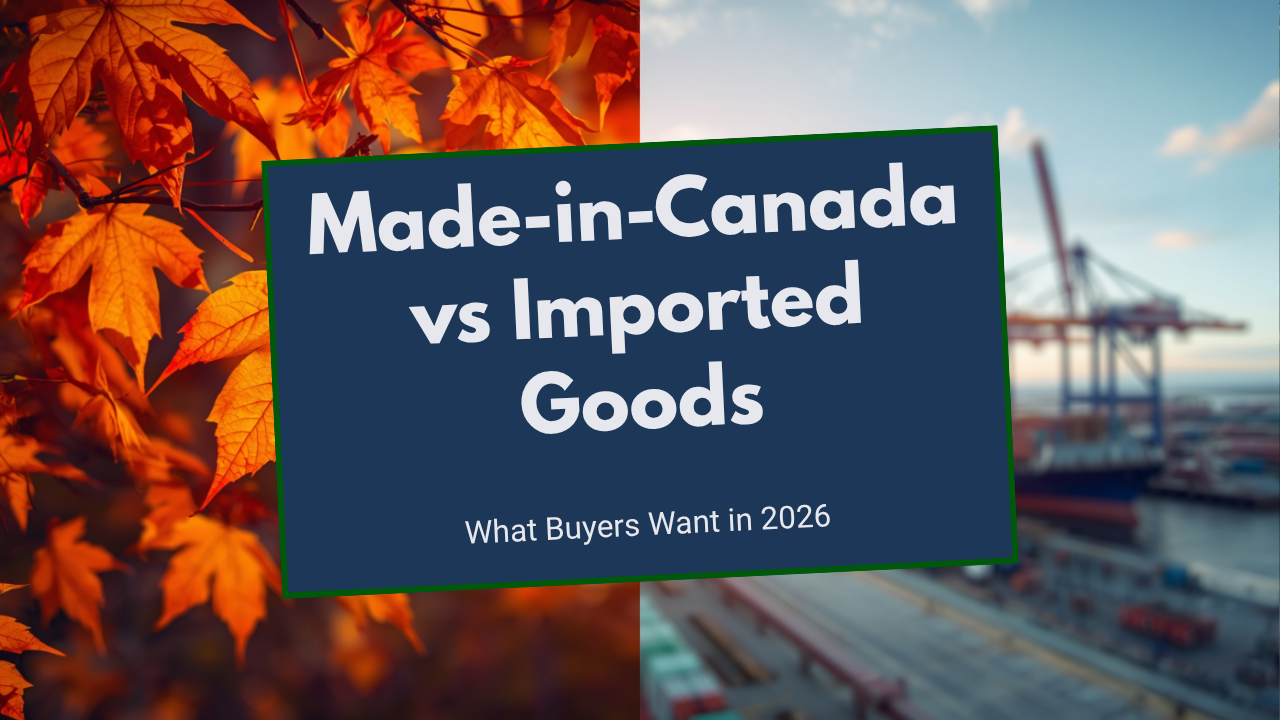
"Made in Canada" sells. Or at least, that's what every survey on the topic seems to say. Ask Canadian shoppers directly and a large majority will tell you they'd rather buy a Canadian-made product than an imported one, even at a premium. But watch what actually happens at checkout, and a different story shows up: price, availability, and quality still decide most purchases, no matter where the label says the product came from.
For Canadian business owners deciding how to source and market their products in 2026, that gap between stated preference and actual behaviour matters a lot. Lean too hard into "buy Canadian" messaging without the pricing or supply chain to back it up, and you'll lose margin chasing a narrative your customers won't actually pay for. Ignore the sentiment entirely, and you'll miss a genuine, growing segment of buyers who will pay more for local origin, especially in food, home goods, and anything tied to identity or trust.
This guide breaks down what Canadian buyers actually want when they say they prefer made in Canada products over imported ones, where that preference is real versus aspirational, and how importers and Canadian brands can build a sourcing strategy that works with the sentiment instead of against it.
Buy-Canadian sentiment isn't new, but it spiked hard through 2025 as tariff disputes and trade tension with the US pushed the idea of supply chain independence into everyday conversation. Grocery stores started flagging Canadian products on shelves. Retailers ran "shop local" campaigns. Search interest in terms like made in Canada products and "buy Canadian" climbed noticeably, and it's stayed elevated rather than fading back to pre-2025 levels.
That's a real shift in awareness. What it hasn't done is eliminate the economics of global sourcing. Canada imports the overwhelming majority of its consumer goods because domestic manufacturing at scale, especially for electronics, apparel, and general merchandise, is still meaningfully more expensive than sourcing from Asia. The patriotic sentiment is genuine. The purchasing power to act on it consistently, for most households, is limited.
Survey data consistently shows Canadians rank domestic origin as a meaningful purchase factor, often just behind price and quality. But when researchers look at actual sales data rather than stated intent, origin labelling moves the needle mostly in specific categories:
Outside those categories, most Canadian buyers behave like buyers everywhere: they compare price and quality first, and treat origin as a tiebreaker rather than a hard requirement. That's not cynicism, it's just how household budgets work when everything from groceries to insurance has gotten more expensive.
The practical takeaway for brand owners: origin claims work best as one part of a value story, not the whole pitch. A product that's well-made, fairly priced, and happens to carry a Canadian angle will outsell one that leads with the flag and nothing else.
There are real segments where domestic origin is close to a deciding factor rather than a nice-to-have:
For anything touching food safety, child products, or electrical goods, Canadian buyers associate local production with tighter compliance, even when an imported product meets the exact same standards. Brands selling into these categories should lean on visible, verifiable compliance markers rather than origin alone. If you're importing rather than manufacturing domestically, make sure your products meet the relevant Canada Consumer Product Safety Act requirements and carry proper CSA certification where applicable. That does more for buyer trust than a flag on the packaging.
Public sector contracts and many B2B relationships have explicit or implicit domestic-content preferences, sometimes backed by procurement policy. If a meaningful share of your revenue comes from government or institutional buyers, "made in Canada" isn't marketing, it's a qualification requirement.
Buyers paying a premium for a specific brand experience, artisanal goods, or products tied to Canadian identity aren't price-shopping the same way mass-market buyers are. Origin becomes part of the product story itself.
For the large majority of consumer goods categories, especially electronics, homewares, apparel, toys, and general merchandise, Canadian buyers overwhelmingly choose based on price and perceived quality, and the products that win those categories are sourced globally, most often from China and increasingly from Vietnam. That's not a failure of "buy Canadian" sentiment, it's just the reality of where manufacturing scale and cost efficiency exist for those product types.
Smart Canadian brands aren't choosing between "made in Canada" and "imported" as an either/or. Many of the most successful Canadian-owned brands source components or finished goods internationally and add value domestically through design, quality control, branding, and customer experience. The label on the box says "imported," but the brand behind it is unmistakably Canadian, and buyers respond to the brand relationship more than the country-of-origin sticker.
If you're weighing whether to manufacture domestically or source internationally, the honest comparison usually comes down to landed cost. Run the numbers properly using a landed cost calculator for Canada before assuming domestic production pencils out, because duties, freight, and compliance costs on imports are often lower than the wage and overhead gap on Canadian manufacturing.
Here's what actually works for Canadian business owners navigating this, rather than picking a side on principle:
Not every SKU needs the same origin story. If you sell both food products and general merchandise, treat them differently. Lean into local sourcing or local finishing where origin genuinely drives purchase decisions, and compete on price and quality where it doesn't.
Canadian labelling rules around origin claims are specific, and getting them wrong is a compliance risk, not just a marketing one. If your product is assembled in Canada from imported components, that's a different claim than fully manufactured domestically, and buyers who feel misled by vague origin claims tend to punish brands hard once they notice. If most of your value-add happens overseas, whether through a factory relationship or OEM manufacturing in China, build your brand story around quality control and design leadership instead of an origin claim you can't fully back.
Price and quality still outrank origin in most purchase decisions. That means sourcing efficiently matters more than it might feel like it should. Whether you're evaluating working with a sourcing agent in China or comparing manufacturing regions directly, the goal is landing a product that wins on price and quality first, with any origin story as a bonus, not a crutch.
A growing number of Canadian brands source raw materials or components internationally and handle final assembly, quality inspection, or packaging domestically. This can support a legitimate "Canadian-made" or "Canadian-assembled" claim while keeping input costs manageable. It also gives you more control over final quality checks before product reaches customers, which matters as much to buyers as where the box was packed.
Reshoring 100% of production to Canada is rarely the financially sound move it sounds like in a headline. A more resilient approach for most SMEs is diversifying supplier geography, so you're not fully exposed to any single country's tariff or trade risk, while keeping cost structures workable. Many Canadian importers have started evaluating options for private labelling from China to Canada alongside other sourcing regions specifically for this reason.
If you do have a genuine domestic-content story, tell it specifically rather than generically. "Assembled in Ontario from globally sourced components, quality-checked before it ships" is more credible and more compliant than a blanket "Proudly Canadian" claim on an imported product. Specific claims build trust; vague ones invite scrutiny, especially as Canadian consumers have gotten more skeptical of origin-washing since the buy-Canadian trend picked up steam.
If your product doesn't have a domestic content story worth telling, don't force one. Lead with what actually wins the sale: price, quality, and a good customer experience. Canadian buyers will reward a well-run business regardless of where the product was made, as long as you're not pretending otherwise.
In some categories, yes, particularly food, health and safety-sensitive goods, and identity-driven purchases. In general merchandise, electronics, and most consumer goods, price and quality still outweigh origin for the majority of buyers.
Canada has specific rules from the Competition Bureau governing "Made in Canada" and "Product of Canada" claims, generally tied to how much of the total production cost occurred domestically. Getting this wrong can trigger regulatory action, so verify your specific claim against current guidelines before using it in marketing.
Not automatically. Run the landed cost comparison first. For many product categories, importing efficiently and adding value through branding, quality control, or Canadian assembly outperforms full domestic manufacturing on both cost and customer experience.
Food and beverage, baby and children's products, health and personal care, and government or institutional B2B sales see the strongest lift from genuine domestic origin claims.
Yes, and many successful Canadian brands do exactly this. The product may be manufactured overseas while the brand, design, customer service, and quality standards are distinctly Canadian. Buyers increasingly respond to that brand relationship as much as a country-of-origin label.
Whether you're deciding to manufacture domestically, import and add Canadian value through branding and quality control, or run a blended model across your product line, the right call depends on real numbers, not sentiment. Epic Sourcing Canada helps Canadian business owners evaluate sourcing options, vet factories, manage quality control, and land products that compete on price and quality first, with a compliant, honest origin story built in where it actually helps.
If you're weighing where and how to source your next product line, get in touch with our team and we'll walk through the real cost and compliance picture with you before you commit.