Canada's Modern Slavery Act and the separate forced-labour import ban carry real consequences for importers in 2026. Here's what businesses need to know to stay compliant.
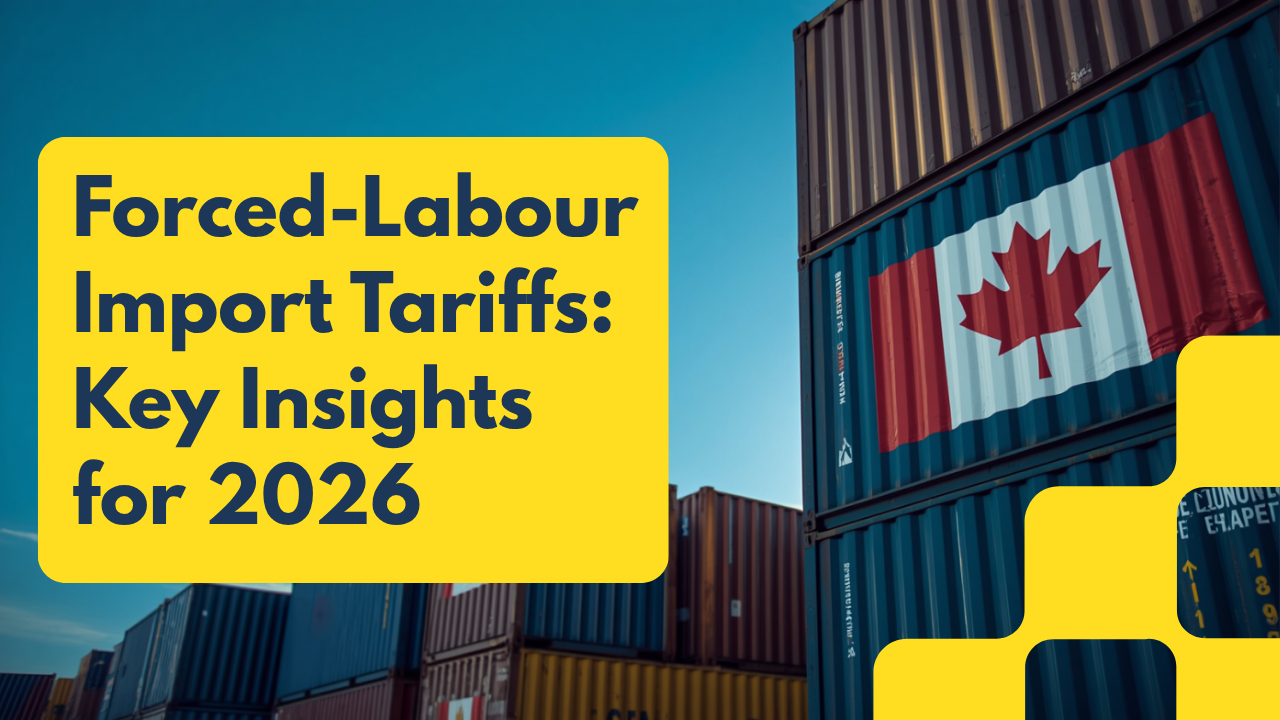
If you import goods into Canada, "modern slavery act canada" compliance isn't optional paperwork you can file away and forget. Since January 2024, Canada's Fighting Against Forced Labour and Child Labour in Supply Chains Act — the law most people just call the Modern Slavery Act — has required thousands of businesses to report annually on how they're keeping forced labour out of their supply chains. Layer that on top of Canada's separate forced-labour import ban under the Customs Tariff, and you have two distinct legal risks that can hold your shipment at the border or land your company in front of Public Safety Canada. Here's what Canadian importers actually need to know heading into 2026.
The Modern Slavery Act canada businesses talk about is formally Bill S-211, which received royal assent in 2023 and took effect on January 1, 2024. It doesn't ban anything outright — instead, it's a disclosure law. Reporting entities must file an annual report with Public Safety Canada by May 31 each year, describing the steps they've taken to prevent and reduce the risk of forced labour and child labour anywhere in their supply chains, from raw materials to finished goods.
The law applies to government institutions and to any corporation, trust, or partnership that is either listed on a Canadian stock exchange, or meets at least two of the following three thresholds: CA$20 million or more in assets, CA$40 million or more in revenue, or 250 or more employees — and that produces, sells, or distributes goods in or from Canada, or imports goods into Canada. If your business is growing toward those thresholds, it's worth building reporting habits now rather than scrambling next spring.
Reporting under the Modern Slavery Act is one obligation. A completely separate rule — Section 132 of Canada's Customs Tariff — has prohibited the importation of goods produced wholly or in part by forced labour since July 1, 2020, when Canada implemented this obligation as part of CUSMA. This isn't a reporting requirement; it's an outright prohibition enforced at the border by the Canada Border Services Agency (CBSA).
CBSA can detain, and ultimately deny entry to, shipments it believes were produced with forced labour, even without a criminal conviction anywhere in the chain. In practice, enforcement has focused heavily on specific sectors and regions with well-documented forced-labour risk, including certain raw materials and finished goods tied to Xinjiang, China. If a shipment gets flagged, the importer bears the burden of demonstrating the goods weren't produced with forced labour — which is a difficult position to be in in the middle of a shipping delay. This is exactly the kind of risk a thorough supplier verification process is designed to catch before goods ever leave the factory.
The reporting obligation catches more businesses than most owners expect, because it counts affiliated and related entities together when assessing the size thresholds. A mid-sized Canadian importer that has scaled past $40 million in revenue, or that has quietly crossed 250 employees across its operations, may be a reporting entity even if nobody at the company realized it. The report has to be approved by the board (or equivalent governing body) and posted publicly on the company's website, which means this isn't a quiet, internal compliance exercise — it becomes part of your public-facing brand.
The report itself needs to cover specific elements: your structure and supply chains, the forced-labour and child-labour risks you've identified, the policies and due-diligence processes you have in place, remediation measures, training given to staff, and how you assess the effectiveness of your efforts. Businesses that haven't sourced internationally before often underestimate how much documentation this requires — particularly around knowing whether you're actually dealing with a factory or an intermediary several layers removed from where the goods are made.
The consequences differ depending on which rule you trip. Failing to file a report, or filing a false or misleading one, under the Modern Slavery Act can result in fines of up to $250,000 per offence, and liability can extend to directors and officers who knowingly authorized the failure. On the Customs Tariff side, the consequence isn't a fine — it's that your goods simply don't get into the country. CBSA can detain shipments indefinitely while it investigates, which for a business running tight inventory or holiday-season timelines can be far more damaging than any fixed penalty.
There's also a reputational dimension that's easy to underweight. Once your compliance report is public, customers, retailers, and B2B partners can and do read it. A vague, boilerplate report signals to sophisticated buyers that your due diligence is thin, which increasingly shows up in vendor onboarding questionnaires from larger Canadian retailers.
A credible audit starts further back than most importers initially go. It's not enough to vet the factory that ships you a finished product — forced-labour risk frequently sits upstream, in raw material extraction or component manufacturing that your direct supplier may not fully disclose. A practical starting point:
This is also where working through a verified sourcing partner pays for itself. An agent or sourcing team that has already visited a factory, reviewed its labour practices, and maintains an ongoing relationship is in a far better position to catch red flags than a business placing one-off orders through an unfamiliar trading company.
The businesses handling this best treat forced-labour compliance as part of standard supplier onboarding, not a once-a-year scramble before the May 31 filing deadline. That means building supplier questionnaires that ask about labour practices up front, requiring documentation before the first purchase order is placed, and revisiting that documentation periodically rather than assuming a supplier's status hasn't changed. It also means understanding your own obligations as the importer of record, since CBSA holds the importer — not the overseas factory — accountable for what crosses the border.
If you're importing through Canada's duty and tax system already, it's worth reviewing how forced-labour compliance intersects with your broader import duties and taxes obligations, since a detained shipment doesn't just delay your goods — it can also disrupt duty drawback timelines and landed cost planning for the rest of your fiscal year.
Enforcement of both the Modern Slavery Act reporting requirement and the Customs Tariff forced-labour ban has been ramping up steadily since these rules took effect, and CBSA has been building out dedicated capacity to identify and detain high-risk shipments. For Canadian SMEs, the practical takeaway is that "we didn't know" is becoming a weaker defence every year these rules are in force. Businesses that build supply chain transparency into their sourcing process now — rather than reacting to a detained container — are the ones that avoid disruption when scrutiny increases.
Most forced-labour compliance failures aren't the result of a company deliberately looking the other way — they're the result of treating compliance as a one-time exercise rather than an ongoing process. A few patterns show up repeatedly among Canadian SMEs that get caught off guard:
Avoiding these mistakes usually comes down to building relationships with suppliers you or a trusted sourcing partner have actually visited, rather than relying entirely on supplier self-certification.
If a shipment is ever questioned, generic assurances from a supplier won't satisfy CBSA. What holds up is a documented trail: signed supplier codes of conduct, records of factory audits (ideally including who conducted them and when), evidence of worker interviews or third-party social compliance audits, and a clear record of how any identified issues were remediated. Keeping this documentation organized — and updating it at least annually — turns a potential weeks-long shipment delay into a straightforward records request you can answer within a day or two.
It also strengthens your position with retail and wholesale partners. Larger Canadian retailers increasingly require vendors to provide forced-labour due-diligence documentation as part of onboarding, independent of whether the vendor is legally required to file a Modern Slavery Act report. Having this documentation ready before it's requested is a competitive advantage, not just a compliance checkbox.
Not every sourcing region carries the same level of forced-labour scrutiny, and pretending otherwise doesn't make the risk go away. Certain raw materials — cotton, polysilicon used in solar components, and some minerals — have been repeatedly flagged by international bodies and by CBSA enforcement actions as carrying elevated forced-labour risk when tied to specific regions. If your product category touches any of these materials, even a few processing steps removed from your direct supplier, it's worth building in an extra layer of documentation rather than assuming your supplier's assurances are enough.
This doesn't mean avoiding a region entirely is the only option. Many Canadian importers continue to source successfully from regions with known risk profiles by working with factories that can demonstrate transparent, auditable labour practices and by diversifying enough that a single flagged shipment doesn't halt their entire supply chain. A direct relationship with a verified factory, rather than an anonymous trading company several layers removed from production, makes this kind of transparency far more achievable.
It's also worth planning for the operational reality of a detention, even if you never expect one. Knowing in advance what documentation CBSA will ask for, and having it ready rather than scrambling to request it from a supplier mid-investigation, is the difference between a shipment delayed by days and one delayed by months.
Does the Modern Slavery Act apply to small businesses?
Only if you meet the size thresholds (two of: $20M+ assets, $40M+ revenue, or 250+ employees) or are listed on a Canadian stock exchange. Many small importers are exempt from reporting, but the separate Customs Tariff forced-labour import ban applies to importers of any size.
Is the forced-labour import ban the same as the Modern Slavery Act?
No. The import ban under Section 132 of the Customs Tariff has existed since 2020 and prohibits importing goods made with forced labour, regardless of company size. The Modern Slavery Act is a separate reporting law that took effect in 2024.
What happens if CBSA detains my shipment over forced-labour concerns?
CBSA can hold the goods while it investigates, and the burden falls on the importer to demonstrate the goods weren't produced with forced labour. This is why documented supplier due diligence matters well before a shipment ever ships.
When is the annual report due?
May 31 each year, covering the previous financial year, and it must be approved by your governing body and posted publicly on your company website.
How can I reduce forced-labour risk in my supply chain?
Map your supply chain beyond your direct supplier, request labour practice documentation before placing orders, and work with a sourcing partner that conducts on-the-ground factory verification rather than relying solely on supplier self-reporting.
Can a shipment be released after CBSA detains it over forced-labour concerns?
Yes, if the importer can provide sufficient evidence that the goods weren't produced with forced labour. This is typically far faster when the documentation already exists rather than being assembled after the fact, which is why proactive due diligence matters more than reactive damage control.
Navigating forced-labour compliance while trying to run a growing import business is a lot to manage alone. Epic Sourcing Canada works directly with vetted factories, conducts on-site verification, and helps Canadian businesses build supply chains that hold up to scrutiny — from CBSA at the border to retail partners doing vendor due diligence. If you want a sourcing partner who treats compliance as part of the job, not an afterthought, get in touch with our team to talk through your supply chain.