A practical guide for Canadian brands sourcing pet wellness and supplement products from China and Vietnam, from vetting manufacturers to Canadian compliance.
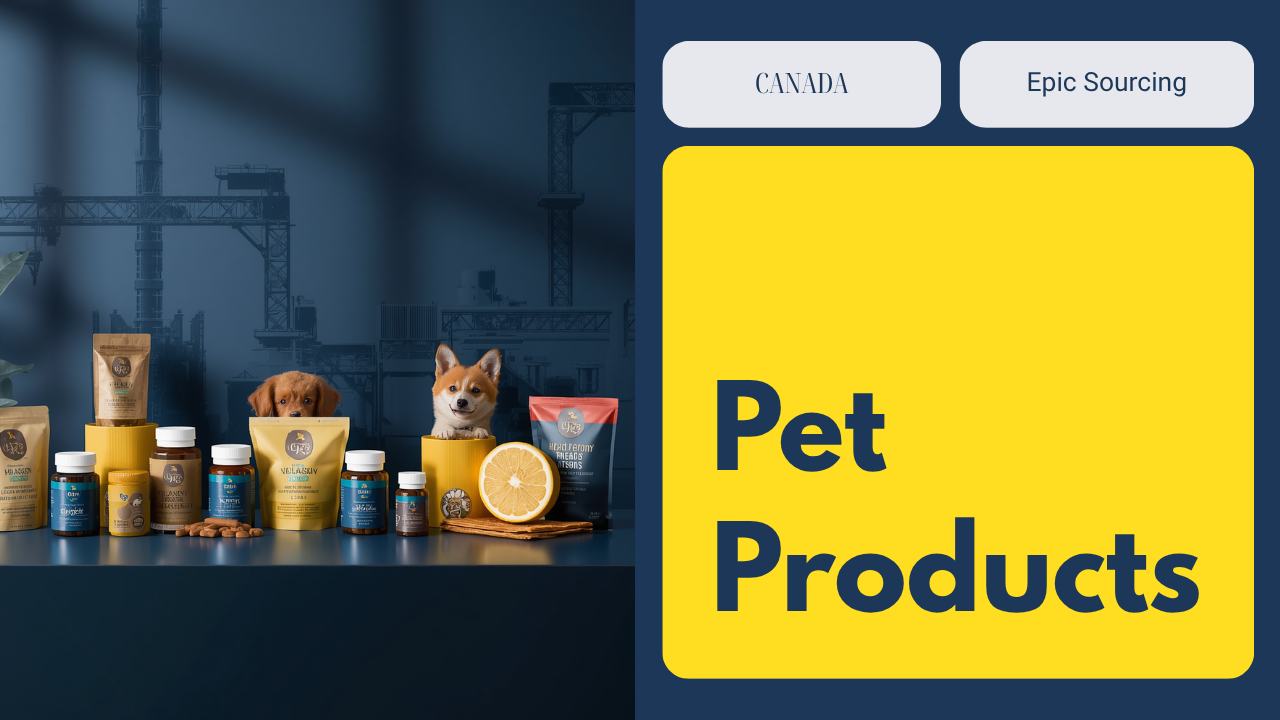
Canada's pet wellness market keeps growing, and supplements are leading the charge — owners are treating joint support, calming chews, and probiotics for their dogs and cats the same way they treat their own vitamins. If you're a Canadian brand looking at pet supplements canada as a category to enter, the opportunity is real, but sourcing pet wellness products correctly is a different game than sourcing a mug or a phone case.
This guide walks through how Canadian brands are sourcing pet wellness and supplement products from China and Vietnam, what to watch for, and where most first-time importers in this category get tripped up.
Pet owners are spending more per animal, not just on more animals. Categories like joint supplements, calming aids, skin and coat support, and probiotics have moved from niche to mainstream in the pet aisle, mirroring the same wellness trend that reshaped the human supplement market a decade ago. For Canadian brands, that means real demand for private label pet wellness products — but it also means more competition and more scrutiny from pet owners who read ingredient labels closely.
Unlike a lot of consumer goods categories, pet supplements sit at the intersection of consumer product sourcing and regulated health products, which is exactly why sourcing them well requires more diligence than sourcing, say, a home decor item.
Both China and Vietnam manufacture pet wellness products, but they're not interchangeable for this category.
China has the most mature pet supplement manufacturing base, with factories experienced in producing chews, powders, capsules, and liquid supplements at scale, along with more flexibility on custom formulations and private label packaging. If you need a specific formula (say, a joint supplement with a particular glucosamine-chondroitin ratio) China's supplement manufacturers generally have more R&D capacity to accommodate it.
Vietnam's pet product manufacturing base is smaller and less specialized in supplements specifically, though it's stronger for pet accessories, toys, and textiles. If your pet wellness line includes non-supplement products — beds, harnesses, grooming tools — Vietnam is worth evaluating alongside China rather than instead of it. We cover this tradeoff in more depth in our China vs Vietnam sourcing guide for Canadian businesses.
For most Canadian brands launching a pet supplement line specifically, China remains the stronger starting point, with Vietnam as a diversification option once the product line expands into adjacent categories.
Three things separate pet supplements from a typical private label sourcing project:
Formulation documentation matters more. You need a clear specification sheet covering active ingredients, concentrations, and manufacturing process — not just a product photo and a target price. Vague briefs are the single biggest cause of quality disputes in this category, which is why we always recommend writing a detailed supplier brief before requesting quotes.
Ingredient sourcing and testing need to be verifiable. Ask suppliers for certificates of analysis (COAs) on raw materials, not just the finished product. Reputable pet supplement manufacturers will provide this without hesitation; hesitation itself is a red flag.
Canadian labelling and compliance requirements apply. Pet supplements imported into Canada need accurate bilingual labelling and need to meet Canadian Food Inspection Agency expectations for pet food and supplement products, separate from the general consumer packaging rules covered in the Consumer Packaging and Labelling Act guide. Confirming these requirements before your first production run avoids costly relabelling later.
Not every factory that says it makes "pet supplements" is equipped to produce a compliant, consistent product. Here's what to check before committing to an order:
Manufacturing certifications. Look for GMP (Good Manufacturing Practice) certification specific to pet or animal health products, not just general food-grade certification. This is one of the clearest signals of a factory that takes quality control seriously.
Batch testing and consistency. Ask how the factory tests for consistency between batches. Supplement potency that varies batch to batch is a common and expensive problem if it's not caught before container-load production.
Private label experience. A factory experienced in private label pet products will already understand packaging requirements, minimum order quantities for custom formulations, and typical timelines — all of which are different from bulk generic manufacturing. Our guide on private labelling from China to Canada covers what to expect from that process.
Sample and pilot order discipline. Never skip a paid sample round and small pilot order for a supplement product, even if the factory has a strong portfolio. Ingestible products for pets carry more liability than a non-consumable item, and a pilot order is cheap insurance against a bad batch reaching customers.
Minimum order quantities for pet supplements vary widely by format. Powder and capsule supplements often have lower MOQs than chews, since chews usually require a custom mold or die for a specific shape — an upfront tooling cost that most factories won't absorb below a certain order size. If you're new to negotiating MOQs, our MOQ guide for Canadian importers explains where there's room to negotiate and where there typically isn't.
Cost per unit also depends heavily on formulation complexity. A basic single-ingredient supplement will always be cheaper to produce than a multi-ingredient blend with specialized delivery formats (chewable, soft chew, liquid dropper), so it's worth deciding early whether you're competing on price or on formulation sophistication — trying to do both usually means a weaker margin than planned.
Should I source pet supplements from China or Vietnam?
For supplement-specific products (chews, capsules, powders), China currently has the more mature manufacturing base. Vietnam is a stronger option for pet accessories and textiles, or as a second sourcing country once your line expands.
What certifications should a pet supplement factory have?
Look for GMP certification specific to pet or animal health manufacturing, along with a track record of providing certificates of analysis on raw ingredients.
Do pet supplements need special labelling for Canada?
Yes. Beyond general Canadian packaging and labelling requirements, pet supplements and pet food products need to meet Canadian Food Inspection Agency expectations. Confirm requirements before your first production run.
What's a reasonable MOQ for a private label pet supplement?
It depends on format — powders and capsules typically have lower MOQs than chews, which often require custom tooling. Expect MOQs to be higher for a fully custom formulation than for a factory's existing formula with your branding applied.
How long does it take to launch a private label pet supplement line?
Realistically, plan for several months from initial supplier vetting through sampling, formulation approval, and first production run — longer if you're developing a custom formulation rather than using an existing one.
Sourcing pet wellness and supplement products means navigating formulation specs, certifications, and Canadian compliance requirements on top of the usual supplier vetting work — and getting any of it wrong is a lot more costly with an ingestible product than with a typical consumer good. Our team helps Canadian pet brands find vetted manufacturers in China and Vietnam, verify certifications and testing, and manage the process from sample through first production run.
Talk to Epic Sourcing Canada about launching or scaling your pet wellness product line.