How Canadian brands and importers source health and wellness products — from supplements and NHPs to fitness equipment and personal care — directly from Chinese manufacturers, with full Health Canada compliance guidance.
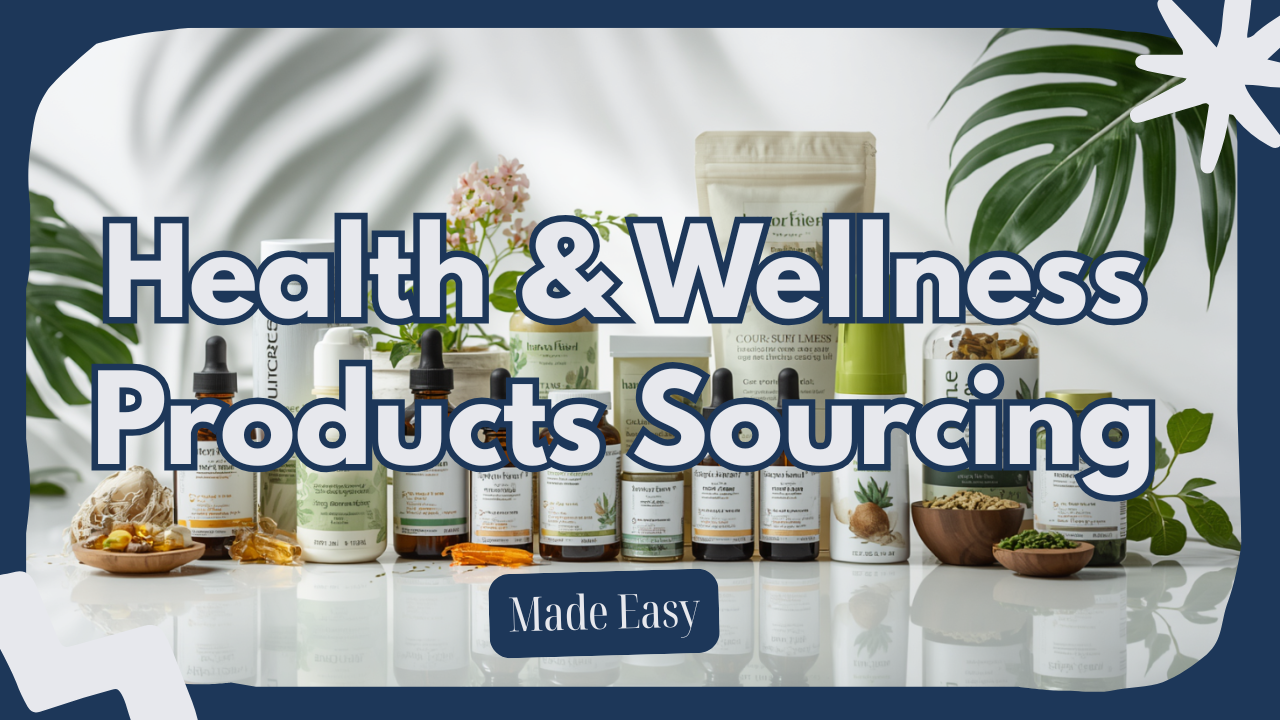
The health and wellness market in Canada is growing fast, and a significant portion of the products on Canadian shelves — from vitamins and supplements to fitness recovery tools, personal care devices, and sleep aids — originate from Chinese manufacturers. For Canadian brand owners and importers, knowing how to source health and wellness products from China effectively is increasingly a competitive advantage rather than a niche skill.
Whether you're building a private label supplement line, sourcing fitness equipment for a retail brand, or looking to expand into natural wellness products, this guide covers what you need to know: which categories are worth sourcing from China, how to vet suppliers for quality and compliance, what Health Canada requirements you need to meet, and how to structure an import program that protects both your customers and your business.
The health and wellness category is one of the fastest-growing consumer segments in Canada. Industry estimates consistently peg the Canadian wellness market in the tens of billions annually, spanning natural health products, supplements, fitness equipment, personal care, and wellness devices. And China manufactures a substantial share of the raw materials, components, and finished products that power this market globally.
Chinese factories offer Canadian brands access to large-scale manufacturing capabilities, established ingredient supply chains, competitive pricing on both raw materials and finished goods, and an increasingly sophisticated ODM ecosystem for private label product development. For supplement brands specifically, China is a leading producer of many common nutraceutical ingredients — amino acids, plant extracts, vitamins, and minerals — that are also produced in Western markets but often at two to three times the cost.
The key for Canadian importers is accessing this manufacturing base responsibly: with the right supplier vetting, third-party quality control, and a clear understanding of what Health Canada requires for products making wellness claims in the Canadian market.
Not every health and wellness product category has the same sourcing profile. Here's a practical breakdown of what works well and what requires extra caution:
Fitness and Recovery Equipment — Resistance bands, foam rollers, massage guns, balance boards, yoga mats, and fitness accessories are consistently strong sourcing categories. These are non-ingestible, carry lower regulatory complexity than supplements, and Chinese manufacturers have deep experience producing them for major North American retailers. Quality variation is real — request multiple sample runs and a clear QC checklist — but the compliance pathway is relatively straightforward.
Natural Health Products (NHPs) — This includes vitamins, minerals, herbal products, homeopathics, traditional medicines, and probiotics. In Canada, NHPs are regulated by Health Canada under the Natural Health Products Regulations and require a Natural Product Number (NPN) before they can be sold. This is the most regulated sub-category in health and wellness, and importers must understand the NPN licensing process before importing finished NHP products from China.
Dietary Supplements (Non-NHP) — Some supplement-adjacent products (protein powders, sports nutrition products, certain functional foods) fall outside NHP classification in Canada and are regulated as foods under the Food and Drugs Act. The pathway to market is different from NHPs — simpler in some ways, more complex in others depending on label claims. Your regulatory consultant should confirm the correct classification for your specific product.
Personal Wellness Devices — Infrared saunas, TENS units, red light therapy devices, portable massagers, and similar wellness devices are growing rapidly in e-commerce. These are typically regulated as medical devices or consumer electronics depending on the claims made. Products making therapeutic claims require Health Canada Medical Device Licence; products marketed purely as wellness tools (without therapeutic claims) may qualify as general consumer electronics.
Personal Care and Cosmetic Wellness Products — Skincare, hair care, and body care products with natural or wellness positioning are sourced extensively from China. These are regulated under the Cosmetics Regulations in Canada and generally have a cleaner compliance pathway than NHPs — you need to notify Health Canada within 10 days of first sale, and the product formulation must not include prohibited ingredients.
Supplier quality in the health and wellness category carries real consumer risk — particularly for ingestible products. Your vetting process needs to be more rigorous here than for non-consumable product categories.
Verify GMP certification for any ingestible product. For supplements and natural health products, the factory must operate under Good Manufacturing Practice (GMP) standards. In China, look for factories certified under China GMP (CFDA/NMPA), ISO 22000 (food safety), or ideally NSF GMP certification — the last being the gold standard for export to North America. Don't source supplements or vitamins from a factory that cannot produce current GMP certificates from a recognized certification body.
Request Certificate of Analysis (COA) for every ingredient and finished product. A COA is the factory's documented verification that a product meets its claimed specifications — potency, purity, microbiological safety, and absence of heavy metals and contaminants. Every batch should have one. If a factory can't produce COAs, do not source ingestible products from them.
Understand the factory's ingredient sourcing chain. For supplements in particular, the factory may not produce its own raw ingredient inputs — it may source them from separate ingredient suppliers. Ask where key ingredients come from and whether the factory tests incoming raw materials. Adulteration of raw material inputs is a documented issue in the global supplement supply chain. Learn more about the compliance documentation you need before placing your first order.
Use third-party pre-shipment inspection for quality-sensitive categories. For ingestible health products, don't skip pre-shipment inspection. An independent inspector in China verifying product appearance, packaging, label accuracy, and documentation before the goods leave the factory can prevent costly mistakes. Our guide to pre-shipment inspections from China to Canada covers what to include in your inspection brief.
Health Canada has one of the more rigorous frameworks globally for regulating imported health and wellness products. Here's what matters most for importers:
Natural Product Numbers (NPNs) for Natural Health Products
Any product that meets the definition of a Natural Health Product in Canada — including most vitamins, minerals, probiotics, herbal supplements, and traditional medicines — requires an NPN from Health Canada before it can be sold in Canada. The NPN is issued to the product licence holder (typically the Canadian brand owner, not the factory), and the application requires detailed information about ingredients, dosage, label claims, and safety evidence.
NPN applications currently take 12–18+ months for standard review. Plan your product timeline accordingly. If you're building a supplement brand, your regulatory pathway is a long-lead-time activity that needs to start well before you want to launch.
Label Requirements for Natural Health Products
NHP labels in Canada must include the product name, NPN, medicinal and non-medicinal ingredients, dosage directions, risk information, and bilingual text (English and French). This is a Canadian-specific requirement — your Chinese factory's standard packaging will not be compliant. Budget for bilingual label design and printing as a separate line item.
Cosmetics Notification for Personal Care Products
Cosmetic products (skincare, hair care, body care) imported into Canada must be notified to Health Canada within 10 days of the first sale. The notification includes the product name, company information, and a full list of cosmetic ingredients. There is no pre-approval process for cosmetics (unlike NHPs), but the product must comply with the Cosmetics Regulations including the Cosmetics Ingredient Hotlist, which prohibits certain ingredients.
CBSA Import Classification and Duties
Health and wellness products span several HS code chapters depending on product type: Chapter 21 (miscellaneous food preparations, including many supplements), Chapter 30 (pharmaceutical products), Chapter 33 (cosmetics and toiletries), and Chapter 95 (fitness equipment). Duty rates and any applicable surtaxes vary significantly by category. Our guide to calculating import duty in Canada will help you understand what to expect before your first shipment.
One of the first decisions Canadian brand owners face is whether to private label an existing product or develop a custom formulation. Both approaches have merit depending on your timeline, budget, and brand positioning.
Private labelling means putting your brand on an existing factory formulation with minimal or no modification. It's faster (no formulation development time), lower MOQ (many supplement factories offer 1,000–3,000 unit private label runs), and lower upfront cost. The trade-off is that competitors can access the same base formulation, making brand differentiation harder over time.
Custom formulation means working with a factory (or an independent formulation specialist) to develop a unique product. You own the formula, and it's significantly harder for competitors to replicate. Custom formulations typically require 6–12 months of development time, higher MOQs (5,000+ units is common), and greater upfront investment in stability testing and regulatory preparation.
For most Canadian brands entering the health and wellness market, private labelling is the right starting point — it lets you validate the market before committing to custom development costs. Once you have proven demand and customer retention data, custom formulation becomes the logical next step.
Health and wellness products often have regulatory shelf-life requirements, batch tracking obligations, and quality consistency standards that other product categories don't. Your supply chain needs to reflect this.
For ingestible products, maintain a minimum of 3–6 months of safety stock in your Canadian warehouse. Supply chain disruptions — whether from factory issues, shipping delays, or raw material shortages — can leave you unable to fulfil Health Canada NPN product availability requirements. Running out of a licensed NHP creates compliance complications beyond just lost sales.
Establish batch traceability from day one. Know which factory batch number corresponds to each shipment, maintain COAs for each batch, and have a clear recall procedure documented before you need it. Health Canada can request batch records during inspections or in response to a consumer complaint. Being able to produce them immediately demonstrates professionalism and dramatically reduces your regulatory exposure.
Also consider that lead times for custom-formulated supplement products are longer than most categories — 90–120 days from purchase order to Canadian warehouse is typical when you factor in production, third-party testing, and sea freight. Plan your inventory cycles accordingly.
Sourcing health and wellness products from China for the Canadian market combines supply chain execution with a non-trivial regulatory landscape. Getting it right means healthier margins, stronger brand equity, and customers who trust your products. Getting it wrong — through adulterated ingredients, non-compliant labels, or unlicensed NHP products — carries real financial and reputational risk.
Epic Sourcing Canada works with Canadian wellness brands at every stage of the sourcing and import process. We help identify GMP-certified factories, coordinate third-party ingredient testing and pre-shipment inspection, manage logistics to Canadian ports, and connect you with regulatory consultants who understand the NHP licensing pathway. Whether you're launching your first private label supplement or scaling an established wellness brand, we can help you source from China with confidence.
Talk to our team about sourcing your health and wellness products →
Do I need an NPN before I import natural health products from China?
Yes. You need an NPN (or an exemption, which applies to a narrow range of NHPs) before you can sell an NHP in Canada — and before you import with intent to sell. Importing without an NPN is a violation of the Natural Health Products Regulations and can result in CBSA seizure of the goods and regulatory action from Health Canada. Start your NPN application well before your expected launch date.
Can I sell Chinese-made supplements directly to Canadian consumers?
Yes, if the product holds a valid NPN and meets all label requirements including bilingual text. Many successful Canadian supplement brands source their finished products or raw materials from China. The key is that the Canadian brand owner holds the NPN and is responsible for ensuring the product meets the licensed specifications in every batch.
What certifications should I look for in a Chinese supplement factory?
At minimum, look for China GMP certification (issued by China's NMPA) and ISO 22000. NSF GMP certification or FSSC 22000 certification indicates a factory operating at a higher standard that aligns with North American expectations. Also verify the factory has current third-party COA processes for both incoming ingredients and finished products.
How do I handle bilingual labelling for products sourced from China?
Your Chinese factory will almost certainly not have French-language labels in place. You have two options: arrange for Canadian label printing and apply labels after import (common for smaller brands), or provide print-ready bilingual artwork to the factory and have them print compliant labels before shipment. The second option is cleaner at scale but requires careful artwork management and label approval processes.
Are there duties on health and wellness products imported from China?
It depends entirely on the product category. Vitamins and supplement capsules under Chapter 30 typically face 0% MFN duty. Many cosmetic products face duties of 6.5%. Fitness equipment varies from 0–7.5% depending on classification. Always confirm the specific HS code and applicable duty rate with a licensed customs broker before importing — and factor duties into your landed cost calculations from the outset.