A complete guide for Canadian importers on sourcing HEPA air purifiers, N95 masks, and wildfire preparedness products from China — covering CSA compliance, supplier vetting, and inventory strategy for wildfire season.
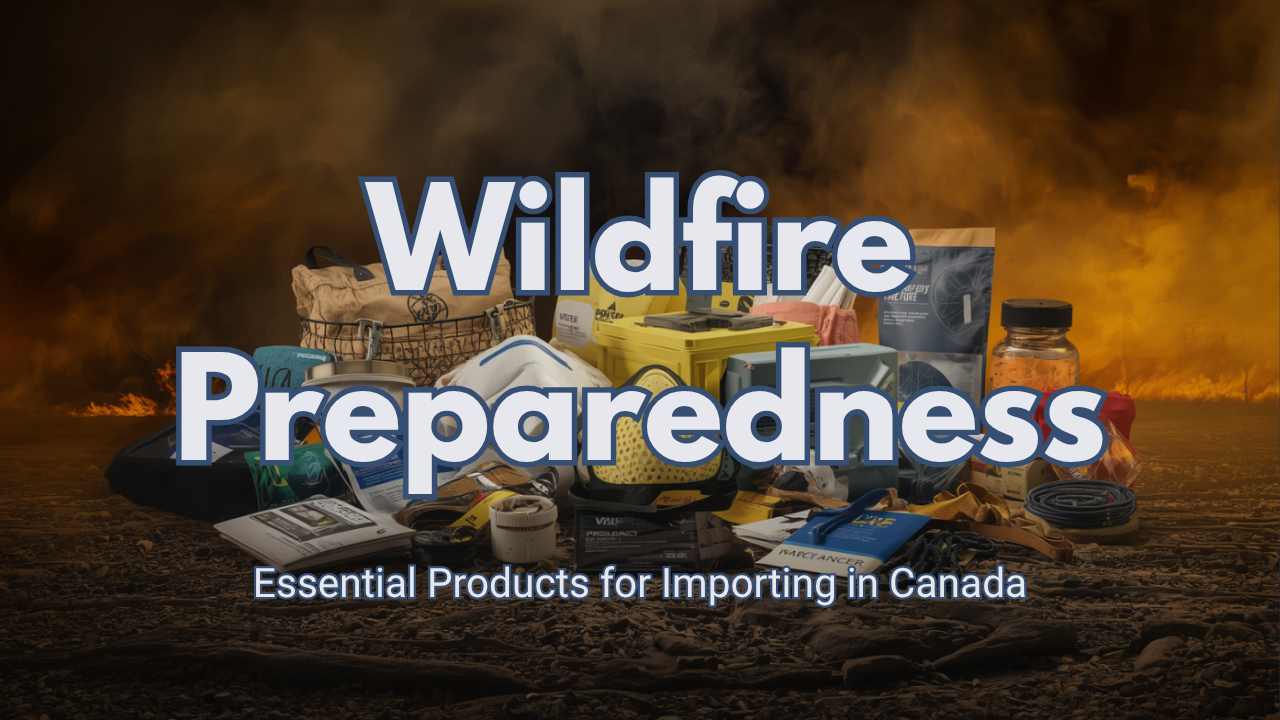
If you source or sell consumer products in Canada, you've watched wildfire season change the market. Every summer, demand for air purifiers in Canada surges as smoke from British Columbia, Alberta, and increasingly Ontario covers major cities. Canadians rush to stock up on HEPA air purifiers, N95 masks, air quality monitors, and portable smoke filtration products — and retailers routinely run out.
For Canadian importers and brand owners, this supply gap is a significant commercial opportunity. Wildfire seasons are intensifying, Health Canada is issuing more smoke advisories than ever, and consumer awareness around indoor air quality has grown substantially since COVID. The demand is real. The question is whether your supply chain is positioned to meet it.
This guide covers everything Canadian businesses need to know about sourcing wildfire preparedness and air quality products directly from Chinese manufacturers — from finding compliant factories to navigating CSA certification and building an inventory strategy that's ready for peak season.
Wildfire smoke has shifted from an occasional nuisance to a near-annual public health event in Canada. In 2023, over 18 million hectares burned — the worst wildfire season on record — with smoke reaching cities as far east as New York. Canadians from Halifax to Vancouver experienced days of hazardous air quality that would have been unthinkable a decade ago.
The commercial implications are meaningful. Consumer demand for air quality products spikes sharply and predictably between May and September. Health Canada and the Public Health Agency of Canada have both endorsed HEPA filtration as effective protection against wildfire smoke particles. Retailers and online sellers consistently run out of stock during major fire events — often within days. And unlike many impulse categories, customers prioritize availability over price when smoke is actively affecting their health.
Beyond wildfire season, HEPA air purifiers have year-round utility: allergies, pets, urban pollution, and post-renovation cleanup all drive ongoing demand. For importers, this means a product category with strong repeat purchasing, genuine brand-building potential, and a growing baseline that isn't entirely weather-dependent.
If you're building or expanding an air quality product line for the Canadian market, here are the primary categories to consider:
HEPA Air Purifiers — The anchor product. HEPA (High Efficiency Particulate Air) filters capture 99.97% of particles 0.3 microns or larger, including PM2.5 wildfire smoke particles. Look for True HEPA certification, CADR ratings appropriate for Canadian room sizes (typically 250–500 sq ft), and multi-stage filtration that includes activated carbon for smoke odour. This is the highest-volume product and the one most likely to generate repeat filter sales.
N95 and KN95 Respirator Masks — N95 is the North American standard certified by NIOSH; KN95 is the Chinese equivalent certified under GB 19083. Both are effective against wildfire smoke when properly fitted. Understanding the regulatory distinction matters when writing product descriptions and making marketing claims in Canada, as Health Canada's requirements differ between the two standards.
Portable Air Quality Monitors — PM2.5 monitors have grown quickly in popularity with health-conscious consumers. These devices show real-time readings and pair naturally with air purifiers as a complete indoor air quality solution. MOQs are typically lower than purifiers, making them a good entry-point product.
Replacement HEPA and Activated Carbon Filters — Consumables create recurring revenue. If you sell air purifiers, stocking proprietary replacement filters turns a one-time hardware sale into a subscription-like revenue stream. Many importers undervalue this and lose filter revenue to third-party sellers.
Outdoor Smoke Protection Gear — A smaller but growing niche: reusable respirators with replaceable filters, outdoor workers' PPE kits, and portable air filtration for vehicles. These appeal to construction crews, landscapers, and anyone working outdoors during fire events.
The key to sourcing air quality products from China isn't finding the cheapest factory — it's finding one that consistently meets Canadian compliance requirements and can document it. Here's what to prioritize in your supplier search:
Start with Alibaba's verified manufacturers, but look beyond Trade Assurance. Trade Assurance provides payment protection but doesn't guarantee product quality or certifications. Focus on factories that have existing export experience to Canada, the US, or Australia; hold ISO 9001 manufacturing certification; and can provide third-party test reports for HEPA efficiency using recognized standards (IEST-RP-CC007 or EN1822). CE marking for European markets is also a useful signal — it indicates a factory familiar with third-party regulatory compliance.
Verify Canadian compliance before production begins. For electrical appliances like air purifiers, CSA or UL certification is required for Canadian retail. For masks, Health Canada has specific standards for performance claims. Bilingual labelling (English and French) is a Canadian-specific requirement that many Chinese factories producing for US markets won't have in place by default. Factor in label redesign costs early.
Request independent lab verification for HEPA claims. Some factories label products "HEPA-type" or "HEPA-like" — marketing terms with no certification backing. Require third-party test reports from SGS, Intertek, or Bureau Veritas confirming true HEPA performance. Certificates from these labs can be verified online — don't accept scanned copies as sole confirmation. You can learn more about what factory compliance documentation Canadian importers actually need before placing their first order.
Most air quality products originate from a handful of concentrated manufacturing regions in China, each with distinct strengths:
Guangdong Province (Pearl River Delta) is home to the majority of air purifier OEM and ODM factories. Strong export infrastructure, many English-speaking operations, and well-established compliance documentation capabilities make this the first place most importers look. Cities like Foshan, Dongguan, and Shenzhen are the primary hubs.
Zhejiang Province specializes in filter media manufacturing — particularly HEPA filter components and activated carbon filter assemblies. If you're sourcing standalone filters or building private-label filtration products, this is the region to explore.
Jiangsu Province is the hub for electronic components and smart air quality monitors. Factories here tend to have stronger R&D capabilities and are better suited for IoT-connected air quality devices.
Understanding whether you're working with an OEM factory (manufactures to your specifications), an ODM factory (has existing designs you can customize and brand), or a trading company (intermediary with no manufacturing capability) is critical to getting the right pricing, MOQs, and product ownership. For building a private label air quality brand, an ODM relationship is typically the fastest path to market. Read our complete guide on OEM vs ODM manufacturing for Canadian businesses.
CSA Electrical Certification — Air purifiers are regulated electrical appliances. For sale through Canadian retail channels, they must be certified by an accredited body: CSA Group, UL (Underwriters Laboratories), or an equivalent NRTL. Most Chinese factories certify to UL standards for the US market. CSA certification is specifically required for Canadian retail — confirm this before agreeing on a factory.
Bilingual Labelling — Under the Canada Consumer Product Safety Act, consumer product labels must include safety information in both English and French. This applies to packaging, the user manual, and any on-device warning labels. Budget for this specifically if you're white-labelling an existing factory product. See our guide to Canadian labelling requirements for importers for the full breakdown.
CBSA Import Classification — Air purifiers typically import under HS Chapter 84. Most face MFN rates from China of 0–4.5%, and duty rates can vary based on CADR ratings and filter type. Work with a licensed customs broker to confirm the correct tariff classification before your first shipment. Read more about Canada customs clearance for first-time importers.
Health Canada Product Safety for Masks — For N95/KN95 masks, Health Canada has issued specific guidance on acceptable standards and performance claims. Unsubstantiated filtration claims on packaging can trigger product recalls and enforcement action. Require current NIOSH approval documentation (N95) or GB/T 19083 test reports (KN95) from the factory before finalizing your product descriptions.
One of the biggest mistakes Canadian importers make with seasonal products is reactive buying: ordering after demand spikes, which means receiving goods after the peak has already passed. Wildfire season follows rough seasonal patterns (peak risk May–September), which means purchase orders need to go out in January–March to have inventory on shelves when it matters.
Air purifier manufacturing lead times from China typically run 45–75 days from deposit to product on Canadian soil (sea freight via Vancouver or Halifax). If you want product in warehouses by June 1st, your purchase order needs to be placed by early February at the latest.
MOQs for HEPA air purifiers typically start at 200–500 units for ODM products with custom branding. For fully custom OEM designs, expect 500+ units. Replacement filter MOQs are usually lower — 300–500 units per SKU.
Because wildfire events are unpredictable in timing and severity, carrying 8–12 weeks of safety stock on air quality products is conservative but appropriate. The margin on these products — particularly at retail — supports slightly higher inventory carrying costs compared to commodity categories.
Sourcing air quality and wildfire preparedness products from China is a real opportunity for Canadian importers — but getting compliance, quality control, and supply chain timing right is what separates a profitable import business from a costly one. A CSA certification issue or a delayed shipment that arrives after fire season ends can wipe out an entire season's margin.
Epic Sourcing Canada works with Canadian importers across every stage of the sourcing process — from identifying compliant factories with existing Canadian certifications to managing quality inspections and coordinating logistics to Canadian ports. We know which factories produce export-ready air purifiers with the right compliance documentation in place, and we can help you move from product concept to Canadian retail shelf faster and with less risk than going it alone.
Contact our team to discuss your air quality product sourcing needs →
Can I sell Chinese-made KN95 masks in Canada?
Yes, but with important caveats. Health Canada has approved certain KN95 masks meeting GB 19083 standards under interim authorization frameworks. The mask must include valid test reports from an accredited laboratory and cannot make unsubstantiated filtration performance claims. Consult a Health Canada regulatory specialist before finalizing your packaging copy.
How much does it cost to import air purifiers from China to Canada?
A mid-range True HEPA air purifier (300–500 sq ft coverage) from a quality Chinese manufacturer typically costs $40–80 USD ex-factory. Add 15–25% for sea freight, marine insurance, Canadian import duties, and broker fees to calculate your landed cost. Consumer retail pricing for comparable products runs $150–350 CAD, leaving strong gross margins for well-managed importers.
Do I need CSA certification for every air purifier model I import?
Yes — CSA certification is model-specific. Each SKU requires its own certification. Work with your factory to identify which models already hold CSA certification to avoid the cost (typically $3,000–8,000 USD per model) and timeline (8–16 weeks) of new testing. Many established factories will have multiple CSA-certified models ready for ODM customization.
What CADR rating should I target for the Canadian market?
CADR (Clean Air Delivery Rate) indicates how quickly a purifier filters a room. For Canadian consumers buying for average-sized rooms (200–350 sq ft), a CADR rating of 200–300 cubic meters per hour is appropriate. Products with higher CADR ratings at competitive price points tend to dominate online reviews and generate stronger repeat purchases.
How do I verify a factory's HEPA certification claims?
Request third-party test reports directly from the factory and cross-reference with the testing laboratory. Reputable labs — SGS, Intertek, Bureau Veritas — allow certificate verification online using the certificate number. Always verify independently rather than accepting factory-provided scans as sole confirmation.