Putian is China's largest footwear manufacturing hub, known for both legitimate OEM production and replica shoes. This guide explains what Putian shoes are and what Canadian importers need to know before sourcing footwear from the region.
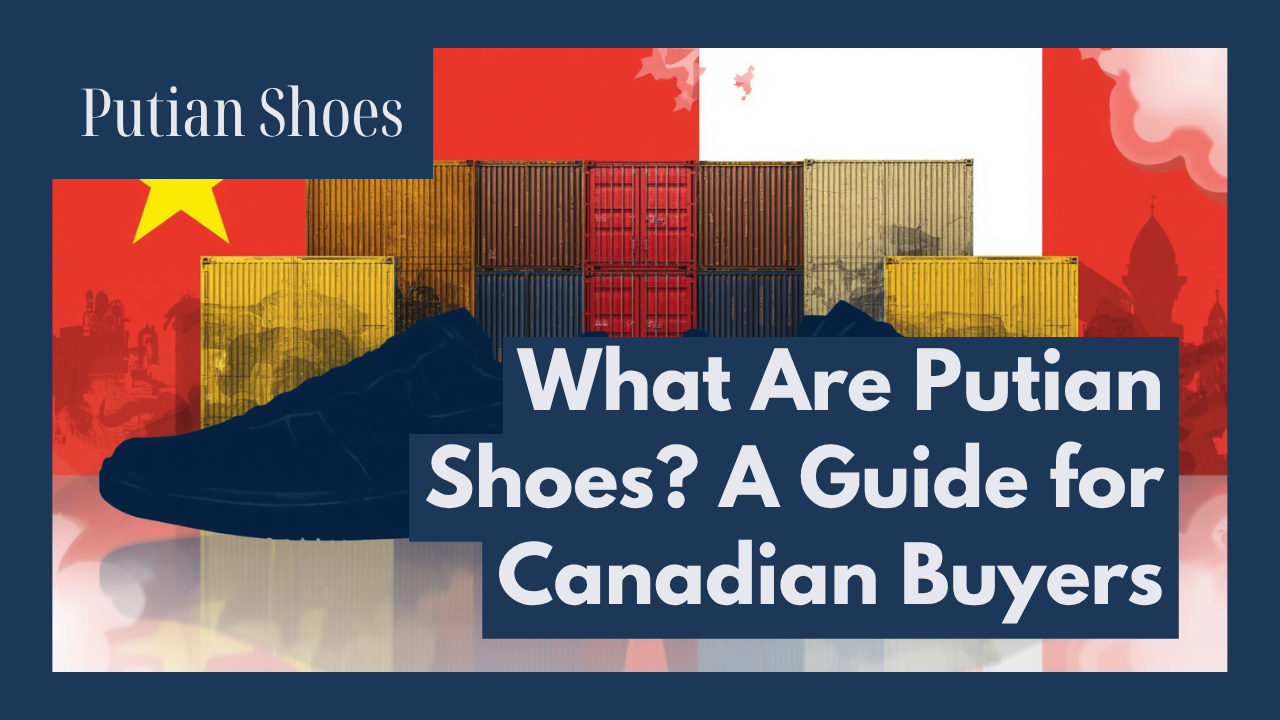
If you've ever searched for sneakers online and come across unusually cheap listings for Nike, Adidas, or New Balance shoes, there's a good chance they came from Putian — a city in China's Fujian Province that has become synonymous with footwear manufacturing, both legitimate and otherwise.
For Canadian buyers and importers, understanding what Putian shoes are — and what they aren't — is essential before placing any orders.
Putian is a city in Fujian Province, southeastern China, with a population of over three million people. It has been a centre of shoe manufacturing for decades, and today it is home to more than 4,200 shoe companies and approximately 500,000 workers in the footwear industry.
When people refer to "Putian shoes" online, they are almost always talking about replica or counterfeit footwear — shoes made to closely resemble branded products like Nike, Adidas, New Balance, Jordan, and others, but sold without authorisation from those brands.
These replicas vary significantly in quality and price. There are generally three tiers:
1. Low-grade replicas: Cheaply made with inferior materials. These are easy to identify and will not pass close inspection.
Is Buying Putian Shoes Legal in Canada?
No. Importing counterfeit branded goods into Canada is illegal. Under the Canadian Trade-marks Act and the Customs Act, counterfeit products can be seized at the border and the importer may face fines or other penalties.
The fact that replica shoes are widely available online does not make them legal to import. Many listings on platforms like DHgate and AliExpress use vague language to obscure the fact that the product is a counterfeit, but the legal risk is borne entirely by the buyer.
The Legitimate Side of Putian: OEM and Private Label Manufacturing
If you are a Canadian business looking to source private-label footwear from China, working with a legitimate Putian factory is entirely viable. The challenge is identifying and vetting the right manufacturer, which is where a sourcing agent adds significant value.
1. Define your product requirements. Decide on the shoe type, materials, sole construction, target price point, and minimum order quantity before approaching any factory.
4. Use a sourcing agent. A local sourcing agent in China can help you communicate requirements in Mandarin, visit factories on your behalf, conduct quality inspections, and manage production timelines. This significantly reduces the risk of receiving poor-quality or non-compliant goods.
5. Understand Canadian import requirements. Children's footwear must comply with the Canadian Consumer Product Safety Act (CCPSA), which includes restrictions on harmful chemicals. All imported shoes must be classified under the correct HS code and declared accurately to the CBSA. Import duties and GST apply to most shoe imports from China.
Bait-and-switch quality: Factories sometimes ship a different (lower) quality product than the samples they provided. Conducting a pre-shipment inspection by a third-party quality control firm helps protect against this.
Customs valuation: Undervaluing goods at customs to avoid duties is illegal. Work with a licensed customs broker to ensure accurate classification and valuation of your footwear imports.
Final Thoughts
If you are considering importing shoes from China, work with a reputable sourcing agent who can help you identify the right factories, manage quality control, and navigate Canadian import requirements. That is the difference between a successful footwear import and a costly mistake.