Trump's new 50% tariff on Canadian goods took effect in July 2026. Here's what it covers, why it matters even if you don't export to the US, and what Canadian importers should do now.
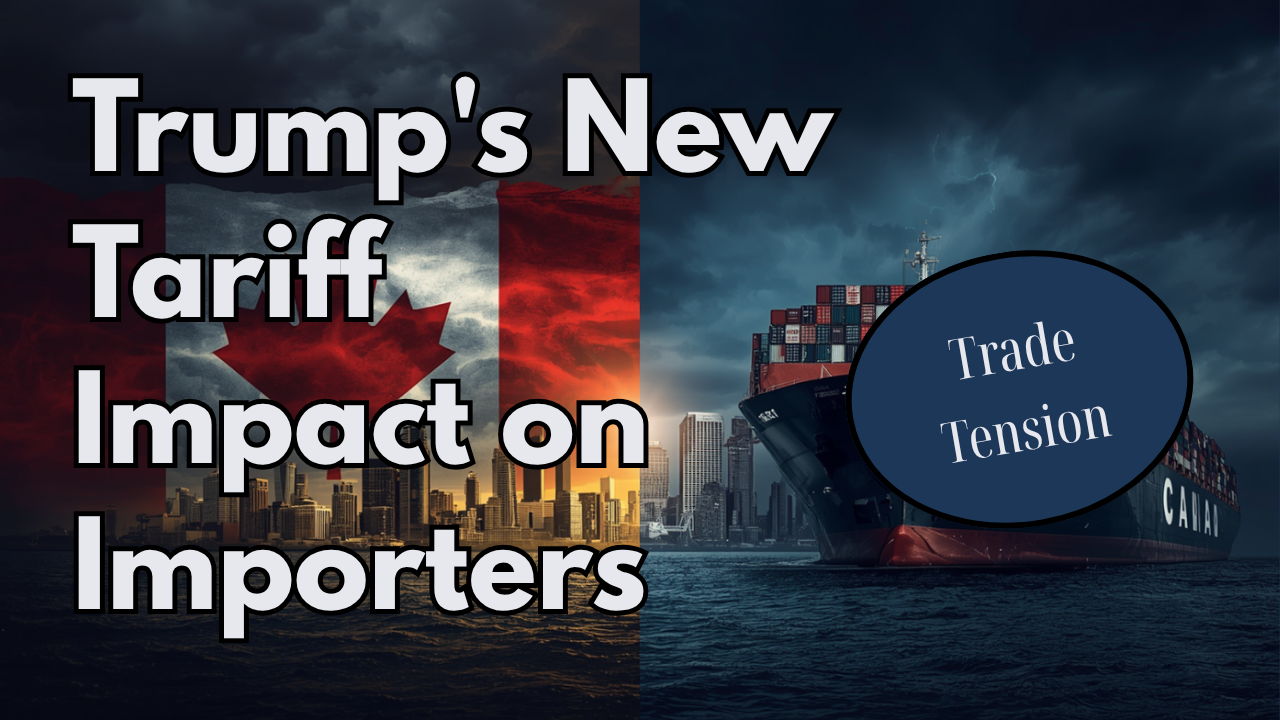
On July 21, 2026, US President Donald Trump imposed a new 50% tariff on a range of Canadian goods, using a provision of American trade law that hadn't been invoked in nearly a century. If you're a Canadian business owner who sources products from China or Vietnam and sells into the US market — or even if you sell only in Canada but compete with importers who do — this Trump tariff on Canadian goods is worth understanding in plain terms, because it changes the risk calculation for how you build and price your supply chain in 2026.
This isn't another vague "trade tensions" headline. The tariff is specific, it applies regardless of USMCA/CUSMA compliance, and it lands at the same time CUSMA itself is in the middle of a formal renegotiation. For Canadian importers, the two stories are really one story: North American trade rules are being rewritten in real time, and businesses that source internationally need a plan that doesn't depend on any single market staying stable.
The White House announced new 50% tariffs on a list of Canadian goods that includes wine, hockey sticks, cement, dairy products, swimming pools, furniture, fishing rods, seeds, clothing, and wigs. The tariffs take effect 30 days after the announcement and were imposed under Section 338 of the Tariff Act of 1930 — a law that allows the president to impose punitive tariffs of up to 50% against a trading partner deemed to have "discriminated" against US goods. It's the first time in the law's history that it has actually been used.
According to the US Trade Representative's office, the new duties apply to roughly $20 billion of Canadian imports, or about 5.2% of the $382 billion in goods the US brought in from Canada in 2025. Crucially, the White House has said these tariffs apply regardless of whether a product is covered under CUSMA (the Canada-US-Mexico free trade agreement, known as USMCA in the US) — a notable departure from how tariff carve-outs have generally worked since the agreement came into force.
Energy, potash, critical minerals, and goods already hit by sector-specific tariffs (steel, aluminum, and non-CUSMA-compliant vehicles, which already carry duties of 15–50%) are excluded from this particular round.
The official justification is "discriminatory treatment": US Trade Representative Jamieson Greer pointed to Canada pulling US alcohol off store shelves, giving the EU better dairy market access than the US, and capping US-brand vehicle exports into Canada from companies reshoring production. Trump had also floated tariffs the week prior over wildfire smoke drifting into the US — a reminder that these decisions are being driven as much by politics as by formal trade law.
Canadian Prime Minister Mark Carney called the move "the latest in a series of unilateral US trade actions" and said Canada has already put detailed proposals on the table to modernize CUSMA, with talks expected to intensify in the coming weeks. None of this is resolved yet, and importers should expect the situation to keep moving before it settles.
If your business sells exclusively inside Canada, it's tempting to treat this as someone else's problem. It isn't, for three reasons:
Look closely at the list: wine, hockey sticks, cement, dairy, swimming pools, furniture, fishing rods, seeds, clothing, and wigs. For Epic Sourcing Canada's client base, apparel and home goods brands are the categories to watch most closely. If you manufacture or assemble clothing in Canada using imported fabric or components and then sell finished goods into the US, this tariff round applies directly to you — separate from any tariffs already in place on the Chinese-origin inputs themselves. It's worth revisiting your labelling and compliance documentation now, before the 30-day window closes, so you know exactly which SKUs are affected.
Go through your product catalogue and flag anything that (a) falls into one of the listed categories, and (b) has any path to the US market, even indirectly through a distributor or marketplace. Don't assume "we don't export" means "we're not exposed" — check where your customers' customers are.
If you're the importer of record on shipments that eventually reach the US, or if your contracts use a Delivered Duty Paid arrangement, you may be absorbing tariff costs you didn't budget for. This is a good moment to review your Incoterms and who holds import responsibility at each stage of your supply chain.
Tariff headlines are dramatic, but for most Epic Sourcing Canada clients, the bigger day-to-day cost driver is still the basic landed cost of goods coming from China or Vietnam: duties, freight, and currency. Keep using a proper landed cost calculator so a US tariff headline doesn't distract you from the numbers that actually move your margin every single order.
Trade uncertainty is the strongest argument yet for not being single-sourced or single-market-dependent. Whether that means qualifying a second factory, exploring Vietnam as a parallel sourcing base, or simply diversifying which markets you sell into, resilience beats prediction here. We've written in more depth about diversifying your sourcing base if you want a fuller framework.
CUSMA rules of origin are technical, and getting classification wrong on a shipment that crosses into the US can be far more expensive than the tariff itself. If you don't already have a customs broker relationship, now is the time to build one — before your next shipment, not after a costly mistake.
This 50% tariff round doesn't exist in isolation — it's the latest entry in a back-and-forth that's been running since early 2025. Canada imposed 25% reciprocal tariffs on roughly $30 billion of US goods in March 2025, added more duties on steel and aluminum products later that month, and hit non-CUSMA-compliant US vehicles and auto parts with 25% tariffs in April 2025. By September 2025, Canada rolled back most of those 25% tariffs on CUSMA-compliant goods, while keeping duties on steel, aluminum, and non-compliant vehicles in place. The new US tariff announced in July 2026 is Washington's next move in that same sequence, and it's reasonable to expect Canada will respond in some form, which means importers should treat this as an evolving situation rather than a single, settled event.
For Canadian businesses already paying elevated duties on steel, aluminum, or non-CUSMA vehicles, this new round adds another category of cost pressure on top of an already complicated landscape. If your product mix touches any of these sectors, it's worth building a running list of every tariff currently affecting your supply chain rather than tracking each announcement in isolation.
Because the tariff takes effect roughly 30 days after the July 21, 2026 announcement, Canadian importers have a short but real window to act. In practice, that means:
This tariff round didn't happen in a vacuum. On July 1, 2026, the US declined to agree to renew CUSMA for another 16-year term, triggering the formal joint review process built into the agreement. That review is a separate but related story — and one that could reshape rules of origin, dairy quotas, and how Canada's trade relationships with non-market economies like China factor into North American trade going forward. We cover what's actually changing, and what it means if your products include Chinese-sourced content, in our full breakdown of the 2026 CUSMA review.
Yes. The White House has said the new 50% tariff applies regardless of CUSMA compliance, which is unusual — historically, CUSMA-qualifying goods have been shielded from many bilateral tariff actions.
It was announced on July 21, 2026, and takes effect 30 days later — so businesses have a short window to assess exposure and adjust before it lands.
Not directly — this tariff targets goods of Canadian origin entering the US. However, if you import components from China, assemble or finish them in Canada, and then export the finished product to the US, that finished product may fall under this tariff even though your raw inputs came from Asia.
Potentially, if Canadian manufacturers who export to the US redirect more inventory to the domestic market or raise prices to offset lost US margin. It's also likely to add to currency volatility, which affects the cost of anything Canadian businesses import.
Check your product's HS classification against the White House fact sheet, and if you're unsure, talk to a customs broker or your sourcing partner. Getting this wrong is more expensive than taking an hour to check it properly.
Based on the pattern from 2025, Canada has generally responded to US tariff actions with its own counter-tariffs on US goods rather than actions targeting third countries like China. That said, any retaliation round adds general uncertainty to the CAD/USD exchange rate, which does affect the cost of goods you import from anywhere, including China and Vietnam.
Generally, no. This tariff targets goods of Canadian origin entering the US — it doesn't change the fundamentals of sourcing from China for the Canadian or broader international market. What it does argue for is building flexibility into your export plans rather than pausing sourcing decisions altogether.
Trade policy is moving fast in 2026, and the businesses that come out ahead are the ones with flexible, well-documented supply chains rather than the ones betting on any single market or agreement staying static. Epic Sourcing Canada helps Canadian importers build sourcing strategies — from factory selection to landed cost planning — that hold up regardless of which way the next tariff announcement goes. Get in touch with our team to talk through how this round of tariffs affects your specific product mix and what to do about it.