A breakdown of the trending product categories Canadian importers are sourcing in 2026, plus how to vet suppliers before chasing a fast-moving category.
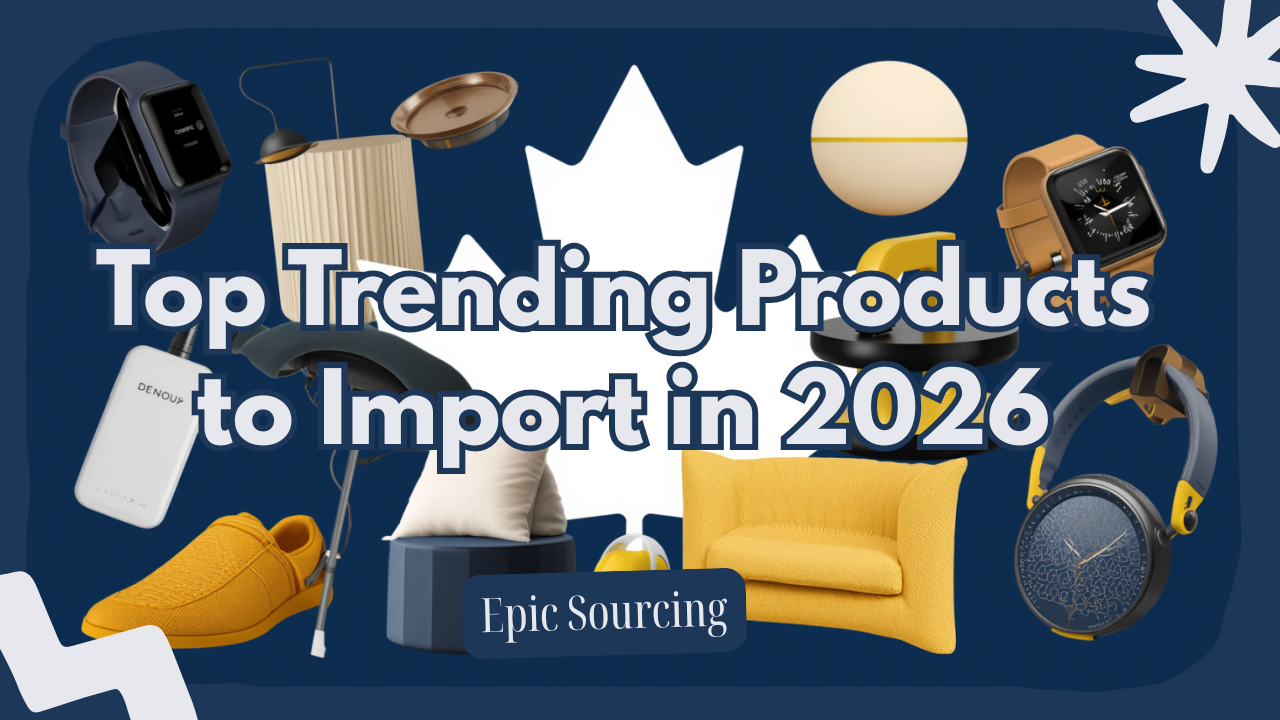
Every year we get some version of the same question from Canadian importers: what should I actually be sourcing right now? The trending products for 2026 that are performing well for our clients aren't random TikTok fads — they're driven by real shifts in Canadian consumer behaviour, climate patterns, and trade economics. This guide walks through the product categories we're seeing genuine, sustained demand for, and — just as importantly — how to vet a supplier for a trending product without getting burned by a category that peaks and disappears in six months.
Rather than pulling from generic "hot products" listicles, the categories below are drawn from what we're actually sourcing and shipping for Canadian clients right now, cross-referenced against search demand, weather and climate patterns, and known regulatory shifts affecting import costs. A product trend is only worth chasing if there's a real, durable reason behind it — not just a viral video. We also flag which categories carry meaningful compliance overhead upfront, since that's the detail most "top trending products" lists skip entirely, and it's often the difference between a category being genuinely profitable or a margin trap once certification and landed cost are factored in.
Rising electricity costs and provincial rebate programs have made home solar and battery storage one of the steadiest-growing import categories we track. Portable solar generators, balcony solar kits, and home battery backup systems are moving well, particularly in provinces with active rebate incentives. We've written a full breakdown of what's involved in importing solar panels and home energy products to Canada, including certification requirements that are very similar to the CSA considerations that apply to any electrical product.
Wildfire smoke events have become a predictable seasonal reality across much of Canada, and consumer demand for air purifiers, HEPA filter replacements, and indoor air quality monitors spikes reliably every summer. This isn't a fad category — it's now a recurring annual demand cycle importers can plan inventory around. Our wildfire preparedness and air quality sourcing guide covers which suppliers are worth vetting ahead of peak season.
Federal and provincial rebate programs for heat pump installations have pushed steady demand for both residential heat pump units and related HVAC components. This is a higher-complexity, higher-certification-burden category than most on this list — see our HVAC and heat pump sourcing guide for what's involved before you commit to a supplier.
Camping, hiking, and cold-weather recreation gear continue to see strong, consistent demand from Canadian consumers, and this category tends to be more forgiving on certification requirements than electrical products, which makes it a lower-barrier entry point for newer importers. Full detail in our outdoor and all-season recreation equipment guide.
Drought conditions in parts of Western Canada, combined with rising interest in home gardening and small-scale agriculture, have driven up demand for drip irrigation systems and water management equipment. It's a smaller category than the others on this list, but one with limited competition and healthy margins for importers who move early — see our irrigation and water management sourcing guide.
Canadian pet spending keeps climbing, and wellness-oriented products — joint supplements, calming aids, functional treats — are outperforming basic pet accessories. This category rewards suppliers who can provide proper ingredient documentation, since Canadian pet product labeling expectations are getting stricter. More detail in our pet wellness and supplement sourcing guide.
Beyond pet wellness, general consumer health and wellness products — recovery tools, sleep aids, functional supplements — remain one of the most durable growth categories for Canadian e-commerce brands. Our health and wellness sourcing guide covers supplier vetting specific to this space.
It's easy to get excited about a trending product's factory quote and forget that unit price is only one piece of what it actually costs to get that product onto a Canadian shelf. Take a mid-range air purifier as an example: a $40 FOB unit price can easily land closer to $58-65 per unit once you account for ocean freight, duties, CBSA processing fees, any required ETL or CSA certification amortized across the order, and domestic warehousing. Importers who price their retail or wholesale margins off the FOB quote alone routinely discover the category is far less profitable than it looked on paper.
Before committing inventory dollars to any category on this list, run a full landed cost calculation using a realistic order quantity, not just a sample-size estimate. This is doubly important for certification-heavy categories like home energy and HVAC equipment, where compliance costs get amortized very differently across a 500-unit order versus a 5,000-unit order.
Use this as a starting filter, not a final answer — always confirm current certification requirements for your specific product with the relevant provincial authority or certification body, since requirements can shift and vary by exact product configuration.
The single biggest mistake we see with trending products isn't picking the wrong category — it's rushing supplier vetting because the opportunity feels time-sensitive. A supplier who can produce a trending product doesn't automatically mean they can produce it well, on time, and compliant with Canadian requirements. Before committing to a purchase order on any product from this list, confirm:
This is exactly where a lot of importers get burned chasing a trend: they lock in a supplier fast to "beat the season," skip proper vetting, and end up with a shipment that's late, non-compliant, or lower quality than the sample. It's also worth deciding early whether Vietnam or China is the better fit for a given product category, since lead times and tariff treatment can differ meaningfully between the two.
Trending doesn't mean simple. Several of the categories above — home energy, HVAC, and even some outdoor equipment — carry certification requirements that catch first-time importers off guard. It's worth understanding CARM and CBSA import requirements before you commit inventory dollars to a new category, and confirming your factory relationship is legitimate in the first place — our guide on whether "Made in China" suppliers are legit is a good starting point if you're sourcing a brand-new category for the first time.
The importers who do well with trending products aren't necessarily the fastest movers — they're the ones with a repeatable vetting process they can run quickly when a real opportunity shows up. That means having supplier vetting criteria, certification checklists, and landed cost calculations ready to go before the trend appears, not built from scratch under time pressure. Working with a sourcing partner who already has relationships in these categories cuts weeks off that process. In practice, that often looks like maintaining a short list of pre-vetted factories across a few adjacent categories, so that when a specific product spikes in demand, you're negotiating a purchase order rather than starting supplier discovery from zero. It also means having your certification questions answered in advance rather than discovering mid-negotiation that a factory has never gone through the process for your product type.
How do you tell a real trend from a short-lived fad?
Look for a durable underlying driver — a rebate program, a recurring seasonal event, or a demographic shift — rather than just search or social volume. Categories tied to weather patterns, government incentives, or aging infrastructure tend to have longer shelf lives than purely viral products.
Is it better to source trending products from China or Vietnam?
It depends on the category and your timeline. China generally offers more manufacturing depth and faster iteration for newer product categories, while Vietnam can offer tariff advantages for certain goods. See our full comparison for the specifics that matter for your product.
Do trending products need different import documentation?
Not usually — the same CARM, customs, and certification requirements apply regardless of whether a product is trending. The risk with trending categories is that importers skip normal diligence because they're moving quickly, not that the rules are different.
How far in advance should I place orders for a seasonal trending product?
For weather-driven categories like air quality products or home energy equipment, aim to have inventory landed at least 6-8 weeks before peak season starts, accounting for production lead time, shipping, and customs clearance.
What's the biggest risk in these categories for a first-time importer?
Underestimating certification and compliance requirements. Several of the strongest 2026 categories — home energy, HVAC, and air quality equipment — carry real certification burdens that catch new importers off guard if they're not planned for early.
Should I diversify across multiple trending categories or focus on one?
For most SME importers, it's better to prove out one category well before expanding into a second. Spreading working capital and supplier relationships too thin across several trending categories at once tends to weaken vetting quality in each, which is where the real risk lives.
We track these categories daily because we're actively sourcing them for Canadian clients, not because they showed up on a trend report. If you're considering entering one of these categories, our team can vet suppliers, confirm certification status, and calculate true landed cost before you commit a deposit. Get in touch with Epic Sourcing Canada to talk through which of these categories fits your business.